Showing posts with label Revolution. Show all posts
Wednesday, 18 June 2014
Kim's Review : Angaaray
"Angaaray" - an Urdu Anthology of short stories, first published in 1932, was an explosive book that created a public furore for criticizing conservative Islam and British colonialism. It turned out to be, an iconic book that changed the rules of Urdu literature and gave birth to the Anjuman Tarraqi Pasand Mussanafin-e-Hind / Progressive Writers’ Association - PWA.
Later on almost all the writers of Indian languages had their own organisations with the same aims and objectives: struggle against British imperialism for the liberalisation of India from the foreign yoke; struggle against imperialism, land for the tillers of the soil. The PWA organisation regarded socialism as an economic system, which could end exploitation and it is no surprise that most of the members were left leaning and later on became a part of the Communist party.
Inspired by British modernists like Virginia Woolf, D H Lawrence and James Joyce, as well as the Indian independence movement, the young writers from Lucknow, who penned this collection — Sajjad Zaheer, Ahmed Ali, Rashid Jahan and Mahmud-uz-Zafar — were eager to revolutionize Urdu literature. Instead, they invited the wrath of the establishment: the book was burned in protest and then banned by the British authorities "for hurting the religious susceptibilities of a section of the community".
Nevertheless, Angaaray spawned a new generation of Urdu writers and led to the formation of the Progressive Writers’ Association, whose members included, among others, stalwarts like Ismat Chughtai, Saadat Hasan Manto, Munshi Premchand, Mulk Raj Anand, Kaifi Azmi, Bhisham Sahni, Habib Tanvir, Sahir Ludhianvi and Faiz Ahmed Faiz.
This slim volume of short stories created a firestorm of public outrage for its bold attack on the hypocrisy of conservative Islam and British colonialism and all copies were burned except for 5. 2 of which were in the British archives. From here, it has been translated into English for the first time by Snehal Shingavi, assistant professor of English at the University of Texas, Austin, where he specializes in teaching South Asian literature in English, Hindi and Urdu.
This edition also provides a compelling account of the furore surrounding this explosive collection with never before seen police documentation and criticism of the ban.
Angaaray is a collection of 5 stories by Sajjad Zaheer, 2 by Ahmed Ali, 1 by Mahmud-uz-zafar and a short story and a one act play by Rashid Jahan. While the stories by the other 3 may seem commonplace today, the stories by Sajjad Zaheer could still be considered inflammatory, so it is quite courageous of Penguin to have published this translation.
Personally, I preferred the work of Rashid Jahan as I could empathise with her characters and got drawn into her stories much more easily. Also they are still contemporary, they aren't just something from a bygone age, they could as well be happening in your neighbours house today. As a gynecologist, Rashid was privy to the social, sexual and medical problems of her patients.
The stories by Sajjad Zaheer were the most difficult for me to connect to, as his writing style in some of the stories is a little too disjointed for my taste. Also, having lived in Islamic nations for 4+ years, I often found that my brain was screaming out at me "how could he write this? Was he begging for trouble?" and so his objective of forcing someone to rethink the widely accepted beliefs would still be in play, today. His stories focus on how religious and social restrictions damage the psyche. Economic vulnerability and sexual predation are linked together in his stories. However the most controversial of his statements in the book appear in Neend Nahin Aati / Can't Sleep
where he remarks that the Prophet might have made the migration from Mecca to Medina to escape his nagging wives. And that God might be a womanizing lecher.
Snehal Shingavi in her opening note says that : "repressed sexual desire and open sexual hypocricy were the intolerable sources of modern frustration for young English-educated men like Zaheer"
Mahmud-uz-Zafar's story was written in English and then translated into Urdu by Zaheer for this collection. Ali's 2 stories revolve around the economic and social vulnerability of women. I'm eager to tart reading his "Twilight in Delhi" which has been beckoning from my bookshelf since awhile.
At the end of the day, these 4 authors published this collection to hold a mirror up to society and encourage people to initiate change and Snehal Shingavi says he composed this translation with similar aspirations in mind, which I think he has done a good job of.
Rating : 3.5 / 5
Monday, 5 May 2014
Brajesh's Review : Island of a Thousand Mirrors
Reading Nayomi Munaweera's, "Island of a Thousand Mirrors", which is set against the backdrop of the Tamil-Sinhala Lankan civil war, bought a great sense of melancholy to me.
I could almost feel the physical pain enter my body, through the pages, as I uncovered the horrors of civil war in my neighboring country.
The story is a fictional autobiography of two girls Yasodhara and Saraswathi, one Sinhalese - one Tamil.
The narrative is deeply personal and brought an unusual connection with the pain and story both. The book remains non-judgmental and leaves the reader with a feeling of futility towards any armed struggle, irrespective of ones ideological position. In the end only war is the sole winner as both sides lose.
The story of "Island of a Thousand Mirrors" moves swiftly from Sri-Lanka to US and back, while continuously pushing the story of Yasodhara forward. This book also touches on the trauma of displacement and emigration with a lot of sensitivity.
Rating : 3.5 / 5
Sunday, 24 November 2013
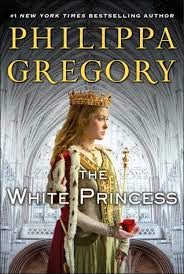
Kim's Review : The White Princess
"The White Princess" is currently the latest and last book in Philippa Gregory's "Cousins War" series. It tells the tale of Elizabeth of York - daughter of King Edward of York and Elizabeth Woodville and wife of Henry Tudor (aka King Henry VII of England)
As daughter of King Edward of York with no known surviving brothers (the Princes in the Tower who went missing were her brothers), Elizabeth had the strongest claim to the throne. But Henry VII who defeated King Richard III (he was betrayed by his own allies) in the Battle of Bosworth, chose to claim his right to the throne by a tenuous claim of inheritance from John of Gaunt. So he crowned himself king, before his marriage to Elizabeth and only crowned her as Queen of England after their son Arthur was a year old.
Margaret passes on her own insecurities to her son, and Henry the VII having spent most of his life outside England in exile, has no one he can trust in his court other than his mother and uncle Jasper Tudor. Unfortunately for her, Elizabeth has inherited the York charm and the people of the country genuinely love her and the Yorks, which only makes her husband more suspicious of her and her intentions. Henry's paranoias soon get the better of him and his impoverished existence when in exile, makes him an avaricious tax collector, which makes him even less liked by the public.
The constant rumors of a surviving male York heir who was spirited away by his mother Elizabeth Woodville, keeps rallying the discontents in England to a new cause against King Henry Tudor and result in many minor battles. It is at this point of the story that Philippa Gregory finally introduces Perkin Warbeck who claimed to be Richard of Shrewsbury, Duke of York, the younger son of King Edward IV and missing brother of Elizabeth of York as a contender to the throne who is defeated and imprisoned by Henry VII. In her novel, Gregory believes that Warbeck was indeed who he claimed to be and his sister accepted it in secret, but due to the threat from her husband, she never acknowledges it in public. (a lot of contemporary historians also believe this line of thought, because of Elizabeth Woodville's support to his cause)
The book ends with the execution of Perkin Warbeck.
The glimpses of Elizabeth of York, that I had seen in The Red Queen intrigued me and made me really keen to read "The White Princess". However, the spunky Elizabeth of York who stood up to her future Mother-in-law Margaret Beaufort, is completely subdued in this book. Margaret Beaufort rules her son and England with a heavy hand and in Philippa Gregory's interpretation, Margaret is a complete terror to her daughter-in-law. The only person who can stand up to her is Elizabeth Woodville. The tyranny of her Mother-in-law and the suspicions of her husband, make Elizabeth of York a much more watered down character that I had expected her to be. But I guess, that was the only way to adhere to the historical facts, given Margaret Beauforts control over Henry and the Kingdom.
It's worth a read to complete the "Cousins War" Series and to get a continuity into starting the "Tudor" Series - The Constant Princess (Catherine of Aragorn)
Rating : 4/ 5
Also Read Kim's Reviews of the other books in Philippa Gregory's - "Cousins War" Series:
The Lady of The Rivers
The White Queen
The Red Queen
The Kingmaker's Daughter
As daughter of King Edward of York with no known surviving brothers (the Princes in the Tower who went missing were her brothers), Elizabeth had the strongest claim to the throne. But Henry VII who defeated King Richard III (he was betrayed by his own allies) in the Battle of Bosworth, chose to claim his right to the throne by a tenuous claim of inheritance from John of Gaunt. So he crowned himself king, before his marriage to Elizabeth and only crowned her as Queen of England after their son Arthur was a year old.
Margaret passes on her own insecurities to her son, and Henry the VII having spent most of his life outside England in exile, has no one he can trust in his court other than his mother and uncle Jasper Tudor. Unfortunately for her, Elizabeth has inherited the York charm and the people of the country genuinely love her and the Yorks, which only makes her husband more suspicious of her and her intentions. Henry's paranoias soon get the better of him and his impoverished existence when in exile, makes him an avaricious tax collector, which makes him even less liked by the public.
The constant rumors of a surviving male York heir who was spirited away by his mother Elizabeth Woodville, keeps rallying the discontents in England to a new cause against King Henry Tudor and result in many minor battles. It is at this point of the story that Philippa Gregory finally introduces Perkin Warbeck who claimed to be Richard of Shrewsbury, Duke of York, the younger son of King Edward IV and missing brother of Elizabeth of York as a contender to the throne who is defeated and imprisoned by Henry VII. In her novel, Gregory believes that Warbeck was indeed who he claimed to be and his sister accepted it in secret, but due to the threat from her husband, she never acknowledges it in public. (a lot of contemporary historians also believe this line of thought, because of Elizabeth Woodville's support to his cause)
The book ends with the execution of Perkin Warbeck.
The glimpses of Elizabeth of York, that I had seen in The Red Queen intrigued me and made me really keen to read "The White Princess". However, the spunky Elizabeth of York who stood up to her future Mother-in-law Margaret Beaufort, is completely subdued in this book. Margaret Beaufort rules her son and England with a heavy hand and in Philippa Gregory's interpretation, Margaret is a complete terror to her daughter-in-law. The only person who can stand up to her is Elizabeth Woodville. The tyranny of her Mother-in-law and the suspicions of her husband, make Elizabeth of York a much more watered down character that I had expected her to be. But I guess, that was the only way to adhere to the historical facts, given Margaret Beauforts control over Henry and the Kingdom.
It's worth a read to complete the "Cousins War" Series and to get a continuity into starting the "Tudor" Series - The Constant Princess (Catherine of Aragorn)
Rating : 4/ 5
Also Read Kim's Reviews of the other books in Philippa Gregory's - "Cousins War" Series:
The Lady of The Rivers
The White Queen
The Red Queen
The Kingmaker's Daughter
Tuesday, 29 October 2013
Kim's Review : The Red Queen
The Red Queen is chronologically the 4th in the Philippa Gregory collection on the women in The Cousins War.
This book tells the tale from the point of view of Margaret Beaufort - mother of Henry VII and hence ancestor of every monarch on the throne of England since then. The initial part of the book, overlaps a bit with the same time period as Jacquetta Luxemberg - The Lady of the Rivers, and its almost parallel to Elizabeth Woodville - The White Queen and Anne Neville - The Kingmaker's Daughter.
History mostly remembers Margaret Beaufort as a strong woman, the influential matriarch of the House of Tudor, but Philippa Gregory portrays her as a spoiled, whiny child with delusions of grandeur and sainthood.
Margaret's father was John Beaufort, the 1st Duke of Somerset, a grandson of John of Gaunt and his mistress(later wife) Katherine Swynford. She was John Beaufort's only legitimate child. But her mother Margaret Beauchamp of Bletso had many more children with her first and third husbands.
In Philippa Gregory's version of Historical Fiction, Margaret hears the tale of Joan of Arc from a poor soldier and imagines herself too to be called by God to do for England what Joan did for France. She keeps thinking of herself as a saintly person and prides the number of hours that she spends at prayer.
Her father dies when she is barely a year old and her mother remarries for the third time, but she continues to control and guide her daughter completely. Margaret's first marriage was to John de la Pole, but her mother got a dispensation from this marriage, when John de la Pole's father - William de la Pole, 1st Duke of Suffolk fell out of favor with King Henry VI. Since Margaret was not yet 12, when this happened, Margaret was not yet 12 and hence was not bound to the marriage by canon law.
King Henry VI, then gave Margaret in wardship to his half brothers Edmund and Jasper Tudor. [sons of King Henry VIs mother - Catherine of Valois - (widow of King Henry V of England) who had an affair and perhaps secretly married Owen Tudor - keeper of the Queen's wardrobe, (essentially her major-domo)]
Margaret, as only heir of her father was rich in land and property, so Edmund Tudor quickly married her with the kings blessing, when she was under his wardship when she was barely 12 years old. Edmund died of plague when taken prisoner during the Cousins Wars, leaving behind a 13-year-old widow who was seven months pregnant with their child.
Her mother quickly arranged Margaret's next marriage with Sir Henry Stafford - her second cousin which was performed after the one year widowhood waiting period was over. The one year that she spent with her son in Wales during this time, is the only time she actually got to spend with Henry VII. The rest of her relationship with her son was only through letters and occasional visits.
As the younger son of his father, Sir Henry Stafford did not receive much of an inheritance, so it was Margaret's lands that were their main source of income. While this marriage lasted 13 years, it did not produce and children and in this book, Margaret is deeply disillusioned by this husbands apathy for war, until he himself dies of wounds inflicted on him in a war that he felt compelled to participate in.
Fed up of being used as a bargaining chip and wanting her own independence, Margaret negotiated her own final marriage with Thomas Stanley, the Lord High Constable and King of Mann. Recognizing in his duplicity, the most suitable man in England who could help her place her son on the throne, this was purely a marriage of convenience, which helped take Margaret into the Court of Edward IV of York and Elizabeth Woodville.
In "The Red Queen", Margaret fears her first husband Edmund Tudor for being a brute, but during the one year of her widowhood she falls in love with her brother-in-law Jasper Tudor. Jasper is the person who has the most influence on the life of Henry VII as he spends the most time with him. He himself remains unmarried until after Henry Tudor defeats King Richard III, when he is married to Catherine Woodville (widow of the Duke of Buckingham, sister of Elizabeth Woodville and aunt of Henry Tudor's wife Elizabeth of York) at the age of 54.
Margaret despises her second husband Sir Henry Stafford for being pusillanimous, but he seems to be the only one of her husbands who genuinely cares for her. He comes across as a practical man and for me, he was the only character in "The Red Queen", that I could sympathise with.
Her third husband Thomas Stanley, is an extremely cunning individual who plays both sides in every conflict and openly supports one of the 2 sides only once the winner is clear.
Margaret believes that she is a Godly woman, a saintly one and chosen by God. She believes God speaks to her (but as her second husband says "how is it that God always seems to want, what you want?" She resents Elizabeth Woodville for being the daughter of a non-royal personage and thinks her a whore and a witch. Yet, she is forced to ally with her for the future benefit of her son, including proposing marriage between their children.
The book ends with Henry Tudors victory over Richard III and Margaret believes that her destiny has been fulfilled.
While Philippa Gregory, normally makes the reader empathize with her leading ladies, but in this case, she doesn't. While reading this, as a reader, I wondered why neither her mother, nor her husbands ever bothered to knock some sense into Margaret's head, that's how frustrated I was with her as a character.
The only characters I respected in "The Red Queen" were Sir Henry Stafford for his wisdom and practicality, Elizabeth of York for her strength of character and the wonderful scene of departure from Margaret Beaufort (I can't wait to start reading "The White Princess") and to some extent Jasper Tudor, for his sense of morality and belief in his cause.
If you want to miss any of the books in Philippa Gregory's War of the Roses series, then this book can be given a miss, because all the major events are covered in the other books and Margaret isn't a compelling heroine. However, its also a great book to contrast the other books against and every great heroine needs a villain, and Margaret Beaufort does fit that role.
There are major discrepancies in her thought process (her sons claim to the throne isn't exactly legitimate, but she seems to think that it is pre-ordained by God) Hence she comes across as delusional and fanatical, but inspite of all that, she is still an interesting character.
Rating : 4 / 5 (-0.5 because the lead character irritated and riled me up, so I could not enjoy the book as much)
Also Read Kim's Reviews of the other books in Philippa Gregory's - "Cousins War" Series:
The Lady of The Rivers
The White Queen
The Kingmaker's Daughter
The White Princess
Wednesday, 16 October 2013
Kim's Review : The White Queen
Philippa Gregory's - "The White Queen" begins where "The Lady of the Rivers" ends and runs parallel to the story line of "The Kingmakers Daughter". So while The Kingmakers Daughter" is about Anne Neville (and a little about Isabelle Neville - the daughters of the Earl of Warwick) and The Lady of the Rivers is about her mother Jaquetta of Luxemburg, later Lady Jaquetta Woodville/Rivers, The White Queen is about the widowed Lady Elizabeth Grey (nee Woodville) who rises to become Queen Consort to King Edward IV (of York)
"The White Queen" begins with the widowed Lady Elizabeth Grey (nee Woodville) waiting by the roadside with her 2 young sons for the newly crowned young King Edward IV (of York) to pass by, so she can petition him to win back her rightful lands and sons inheritance from her mother-in-law who has appropriated it all after the death of her son. However, Edward IV falls in love with her and she with him. So while some call it witchcraft and she calls it love, yet they get married in secret, while the Kingmaker is trying to arrange the Kings Wedding with a Princess from France.
So through her marriage, she automatically makes some very powerful enemies. To counter this, she and her mother raise their own relatives to high positions across the land and the church and arrange high ranking marriages for their extensive family which further angers and upsets both families of Royal blood and rank and the commoners.
The whole of the book deals with the multiple wars that are fought during this period of the War of the Cousins / War of the Roses and the machinations and plotting around these events. Jaquetta's Wheel of Fortune keeps turning for this young couple too, but ultimately ends with Edward IVs early death when his heir and son Edward V is still barely 12 years old.
Edward IV's brother Richard (Duke of Gloucester) kidnaps Edward V with the intention of becoming his Lord Protector, but ultimately ends up locking him in the tower and declaring himself king. The unfortunate Edward V and his younger brother Richard are the "2 Princes of the Tower" whose bodies were never found and whose disappearance is an unsolved mystery unto this day.
However, in this version of events, Philippa Gregory hints that having had her eldest son locked in the tower, Elizabeth actually secreted her second son Richard into hiding and substituted him with a simple page boy when forced to give up her second son into the keeping of their uncle Richard of York.
The White Queen ends with the death of Anne Neville, Elizabeth's eldest daughter (also named Elizabeth) betrothed to Henry Tudor (another cousin claimant to the crown) but in love with Richard of York and Richard of York being suspected by the people of poisoning his wife.
I would love to read an account of Elizabeth of York too and I hope Philippa Gregory has planned to write one, because she is another strong woman who was forced into marriage like a pawn with a man she did not care for. And in The White Queen, Gregory alludes to her having greater power than her mother in terms of magic.
{Added on 20 Oct 2013 : Yes, she has written a book on Elizabeth of York, released earlier this year called "The White Princess"}
Any woman who ever dreamed of being a queen or a princess would quickly grow to even hate the concept if she reads these books of Historical Fiction. Being used as a pawn by their fathers, brothers and husbands to further their own alliances, then married off to philandering husbands (no matter that they are Kings) and constantly worried for the life, health and safety of themselves, their families and their children.
As Elizabeth of York tells her mother when they are hiding in sanctuary - "It is a curse to be born Royal, I just want to be ordinary and marry a man of my choice and live in the country"
Yes, its another wonderful book by Philippa Gregory. What is truly amazing is how even a reader who completely empathises with Anne Neville in The Kingmakers Daughter and distrusts Elizabeth Woodville, can completely empathise with Elizabeth Woodville in "The White Queen" and that is the genius of Philippa Gregory as a writer of Historical Fiction.
Starting on "The Red Queen" next. will let you know how it goes :)
Rating : 4.5 / 5
Also Read Kim's Reviews of the other books in Philippa Gregory's - "Cousins War" Series:
The Lady of The Rivers
The Red Queen
The Kingmaker's Daughter
The White Princess
Tuesday, 15 October 2013
Kim's Review : The Lady of the Rivers
The "Lady of the Rivers" is chronologically the first book by Philippa Gregory around the War of the Roses / War of the Cousins. But since I had read The Kingmakers Daughter first, I was completely prepared to hate Jacquetta - the main Heroine in this book. It is a testament to Philippa Gregory's talent as a writer, that I fell in love with Jacquetta within the first few chapters of this book.
Historically, not much is known about Jacquetta. Born Jacquetta of Luxemburg (to the Count of St Pol, rulers of the Duchy of Luxemburg) she is married while still a child to the widowed Duke of Bedford - brother of King Henry V (House of Lancaster) and uncle to Henry VI who became King when just 7 years old. With the scandal attached to his widowed Mothers remarriage, Jacquetta became the foremost female of the English court with the wife of her husbands brother the Duke of Gloucester.
However Jacquetta's husband died early in her marriage and she fell in love with her husbands squire Richard Woodville and created an international scandal of sorts by marrying him secretly (she being of the Royal family and him being a Commoner) She was forced to pay a huge fine and live the life of a common land owner until the marriage of Henry VI to Margaret of Anjou - a French Princess.
Given Jacquetta's French roots, she was considered by the Court of England to be the best person to help the new Queen acclimatise to England and the ways of the Court and sent to bring Margaret from Anjou to England. Given their common background (French Ancestry - marriage to English Royalty, early marriage etc)) Jacquetta as chief Lady-in-Waiting to Margaret again became the 2nd most powerful woman in the English Court and her husband Richard Woodville is entitled Earl Rivers.
Over the years, Jacquetta and her 2nd husband - Richard Woodville - supported the Lancastrian claim to the throne and fought wars on their behalf, until her husband Richard, lost a battle to Edward of York and as terms of his release swore to never again take up arms against the Yorks.
With the York cousins in power, Jacquetta's family again fades from memory until her daughter Elizabeth Woodville - a widow with 2 sons - manages to enrapture King Edward of York who marries her secretly while his marriage is being negotiated with a Princess of France and takes her to London as his Queen.
While this causes a huge scandal again and breaks down the relationship between King Edward of York and his mentor the Earl of Warwick, as mother to the Queen, Jacquetta again rises to the position of 2nd most powerful woman in the realm, but this time in the service of the Yorks.
Her rise and fall from power and influence change with each war and she calls this the turn of the wheel of Fortune.
Jacquetta is a descendant of the mythic Goddess/mermaid Melusina and legend holds that the oldest girl of every generation of the House of Luxemborg, would have special wisdom and powers.
But this is also the mid 15th century and Joan of Arc is imprisoned in her uncles castle under the charges of treason, heresy, witchcraft and wearing mens clothes. While still a child, Jacquetta witnesses the burning of Joan of Arc by the Church and her Grand aunt cautions her to keep her "gifts' to herself.
However, her constant rise back to power, the number of children that she begets and her influence over key decision makers, has the Earl of Warwick declaring her a witch when he seizes power back from King Edward of York.
It is around these facts, that Philippa Gregory builds a tale of a powerful, independent woman in the mid 15th century. A woman who threw caution to the winds to follow her heart. Building on the recorded accusation of witchcraft against her, Philippa Gregory attributes many more magical powers to her heroine in this book and it makes for an extremely fast paced read.
It was really tough to put down this book at any point, because you just want to keep turning the pages. I absolutely loved it, as will any other reader of the Historical Fiction genre.
Rating : 4.5 / 5
Also Read Kim's Reviews of the other books in Philippa Gregory's - "Cousins War" Series:
The White Queen
The Red Queen
The Kingmaker's Daughter
The White Princess
Monday, 12 August 2013
Kim's Review : The Kingmaker's Daughter
Another brilliant book from Philippa Gregory.
And reading this book I completely understood why a lot of people say that George Martins "Song of Ice & Fire" Series (popularly known by the TV name - Game of Thrones) is inspired in parts by the Wars of the Roses / Wars of the Cousins - a series of dynastic wars fought by supporters of the 2 branches of the House of Plantagenet - the House of York (White Rose as Herald) & the House of Lancaster (Red Rose as Herald) for the throne of England between 1455 and 1485.
The Kingmakers Daughter is actually 4th in chronological sequence of the books Philippa Gregory has written about the Wars of the Roses. However, the beauty of her books is that each novel is a stand alone and will only inspire the reader to read the rest of the series.
Since I had been gifted this book, this is what I started reading forst, but even before I was halfway through I had already ordered the rest in the series. Lady of the Rivers, White Queen, Red Queen, and White Princess.
The Kingmakers Daughter is told from the perspective of Anne Neville, daughter of Warwick "the Kingmaker" and wife of Edward of Westminster, Prince of Wales, and later of Richard III of England, and the second perspective narrative of Anne's elder sister Isabel Neville, wife of George Duke of Clarence.
Truly, this book made me realise that women born into Royal families were just pawns in a larger game played mostly by the men. In this book, you see how Anne & Isabel Neville & Elizabeth of York are used by the men to further their own plans.
Anne & Isabels father - Richard Neville - the Earl of Warwick first supported King Henry VI (Lancaster) claim to the throne. But later, he sided with Richard - Duke of York to oppose the King. As foster to Richard's children - Edward, George & Richard, he placed Edward of York (now King Edward IV) on the throne after deposing Henry VI and since Richard, Duke of York was killed in battle.
However Edward IV soon fell out with the Kingmaker over his own secret marriage to Elizabeth Woodville (a widow of mid ranked aristocracy with 2 sons from her first marriage) while Richard Neville was in France, negotiating Edward IV marriage with a Princess of France.
With the increasing influence of Elizabeth Woodville and her extremely large extended family over the functioning of the Court, Richard Neville soon plotted to put George (the 2nd son of Richard of York) on the throne. So before doing that, he married George to his daughter Isabel in a secret ceremony and got George to rebel against his brother.
However, this plan never took off completely. so Richard Neville contrived with Margaret Anjou (wife of deposed King Henry VI) to marry off their son Edward of Westminister to his younger daughter Anne, with the promise of putting Henry VI back on the throne. This was inspite of Margaret Anjou being personally responsible for the death of his own father and brother.
However, in a battle on behalf of the House of Lancaster (Henry VI & Edward of Westminister), against Edward IV, both he and Edward of Westminister are killed after a brief period during which he brought back Henry VI to the throne. Partly because George of York (married to Isabel) defected back in favour of his brother Edward IV and betrayed Richard Neville.
For his role in bringing him victory, Edward IV gifted the lands of Richard Neville's wife to George and Isabel as Isabels inheritance. However, technically Anne as the other daughter also had a right to an equal share of those lands. So George and Isabel practically force the 14 year old widow Anne into a form of house arrest to keep her from marrying anyone else and claiming her share.
Into this scene of despair for Anne, in waltzes Richard of York (younger brother of King Edward IV & George of York) who may have been in love with Anne (or her inheritance) and he rescues/kidnaps her and marries her. Fiercely loyal to Edward IV, he refuses to do or say anything against him and he sets up his seat in the far North trying to manage his subjects the way his mentor Richard Neville taught him.
In due time, Isabel, George and their youngest son are killed (most probably due to the behest and machinations of Elizabethe Woodville) and this makes Anne fear for her own life and that of her husband and son.
But it is the death of his brother Edward IV, that prompts Richard of York into action when he realises that although Edward IV's son - Edward V - will succeed the throne, he will be completely controlled by Elizabeth Woodville and her family - none of whom are of Royal blood. So he imprisons Elizabeth Woodville and her brood of children within a few months of his brothers death.
So thus Anne finally becomes Queen of England, fulfilling her fathers wish of making his heirs rulers of England.
As you can see the history is extremely complicated and made even more so with similar names and changing titles, but Philippa makes everything seem simple and straightforward and easy to follow.
I loved the book, but I really wish that I had started reading it chronologically. It however will be interesting to read the other books from other perspectives - Elizabeth Woodville, her mother and her daughter and Margaret Beaufort (who later tried to put her son Henry Tudor on the throne.
The Kingmakers Daughter had me rooting for Anne throughout, but I wonder if that will continue once I read the other perspectives. Philippa does not write her Historical series chronologically, so she may write a book with a heroine set in a time between these other ladies. You can never tell.
However, if British History interests you and textbooks are too boring, I'd unhesitatingly recommend this series. Sure it had a fair amount of fiction thrown in, but thats what makes it so human and interesting than just facts.
Rating : 4 / 5
Also Read Kim's Reviews of the other books in Philippa Gregory's - "Cousins War" Series:
The Lady of The Rivers
The White Queen
The Red Queen
The White Princess
Friday, 5 July 2013
Kim's Review : The Conqueror
I first read Georgette Heyer, way back in the early 90's, because my mum and her sisters had some of them in my Grandparents library. (Yes, our family has a long history of Bibliophilia)
What I loved about her books was the period settings, the historical references, the believable characters and the sheer depth and range of descriptions, that transported me directly into those eras. So meticulous was she, that Georgette Heyer is considered the innovator of the historical romance genre and its subgenre - Regency romance.
Heyer's strongest suit was the meticulousness of her research. Given that she lived in the pre-internet, pre-google search era (1902-1974), it is not surprising that at the time of her death, she had over 1,000 historical reference books and it was widely accepted that no one in England at that time, knew more about Regency language than Heyer.
I'd been wanting to read more Georgette Heyer, ever since Arrow started reprinting her books. But this idea lay on the backburner for awhile. I bought 2 last year, but only just got around to reading the first.
Georgette Heyer wrote "The Conqueror" in 1931, over 900 years after the events described in the book.
This book tells of William the Conqueror, bastard son of Robert the Magnificent - Duke of Normandy. Since Robert died when William was around 7 years old, with no legitimate sons, William succeeds him as the Duke of Normandy.
Most of the story is told through the eyes of the fictional character Raoul de Harcourt. Raoul is captivated by William at a young age and enters into his service. He comes to the notice of William who realises that Raoul has been sleeping unbidden outside his bedroom to keep him safe from would-be traitors and murderers (earning him the sobriquet - "the Watcher") and actually saves his life by doing so.
Raoul becomes William’s favourite, and serves with him in all his military campaigns and is the closest thing to a friend, to the calculating and political William. Raoul also provides the reader with a more humane world view and is a more endearing character than William himself.
The book which starts from Williams birth, tells of how he regains control of his Duchy on attaining adulthood. He then unifies and strengthens Normandy and finally is crowned King of England with the blessings of Rome after defeating Harold Goodwinesson.
The Conqueror offers an interesting contrast between Harold Goodwinesson and William the Conqueror. While Harold is loved and respected by his people, William inspires respect through fear. Harold reacts emotionally, whereas William is extremely cold, calculating and plans everything in great detail, he does not let his emotions interfere in his decisions in any which way, except in the case of his courtship and marriage to Matilda of Flanders.
And what a strange courtship it was. Since she refused in open court to marry him as she was of pure Royal blood (her Father was Earl of Belgium and her mother was the sister of the Queen of France) and he was a bastard, whose grandfather was a tanner. On hearing of this insult, William rode from Rouen to Flanders, rushed into her castle, whipped her with his riding crop and then pretended to forget about her for a couple of years!
The book is generally true to history, except for a few characters that have been created to smooth the story along. Also, while the book says that Judith who married Harold's brother Tostig was Matilda's sister, history says she was most probably Matilda's aunt.
The Conqueror is an interesting read but slightly difficult because of the language and structuring of sentences and period dialogues. (Read an excerpt here to see what I mean) But its worth persisting.
My most interesting takeaway from this book, is that although the Normans ruled England for almost a century, they soon lost not only England, but also their identity in Normandy. Normandy was retaken by France and amalgamated into the French culture.
I wish there were more books like this about Indian History too. The fights and squabbles between the various rulers in Europe are so similar in ways to the skirmishes and wars between local Indian rulers and chieftains. They would definitely make for interesting reading.
Rating : 3.8 / 5
Thursday, 14 March 2013
Kim's Review : Song of Ice & Fire - Dance with Dragons (Dreams & Dust, After the Feast)
OMG! OMG! OMG! What a phenomenal book! What a suspenseful ending and absolutely no clue when the next in the series will be out. So many cliffhangers and no book 6 on the horizon.
At the Start of Book 5 of a Song of Ice & Fire, George Martin revealed that, he split Feast for Crows from Dance with Dragons, geographically rather than chronologically and that's why some characters were missing from Feast for Crows.
A Dance with Dragons is massive at 950+ pages and may seem daunting to begin, but after reading the first 4 books, there was no way I could postpone reading book 5
This is the first time, I finished a book and felt bereft. I was so engrossed in this series over the last few months (on & off), that now that I've finished reading every published book and the 3 chapters released by George R R Martin online (and read out to fans at comic con), I miss it. I miss the characters, I miss the storyline, I miss everything about the books. I guess this was part of the reason I waited over 4 weeks to write this review. Because writing a review, for me, means that I am done with a book. And I'm not ready to be done with the Song of Fire and Ice, yet.
Parts of me are still living in Kings Landing where Cersei's fate is unknown, on the wall where Jon Snow's fate is unknown, beyond the wall where Bran Stark's fate is unknown, in the North where Asha Greyjoy, Theon Greyjoy, Jeyne Poole, Roose Bolton, King Stannis Baratheon and Rickon Starks fate is unknown (Rickon isn't mentioned in this book either and I'm so worried for him). Catelyn Tully is missing in this book and Jaimie Lannister has gone off with Lady Tarth and no one knows where.
Princess Myrcella is hurt and the Prince of Dorne has sent his children and his brothers children all across the realm on their missions, how many of them will reach safely and how many of them will be able to fulfill the duties entrusted to them?
Beyond the narrow sea, Daenerys fate is hanging in the balance. Who are the 3 who will finally ride the dragons?
George Martin says that book 4 was a bitch & this book was 3 bitches and a bastard.
Since I've come to the end of book 5, here is my guesswork on what could be a possible plot line. ***(Spoilers ahead, don't read if you haven't read the previous books)***
Since book 2, I have suspected that Jon Snow is not Eddark Stark's son, but that of his sister Lyanna Stark who was raped by Rhaegar Targaryen. Making Jon of Targaryen descent.
Hence Jon Snow, Young Griff who is actually Aegon Targaryen (Rhaegar's son from his lawfully wedded wife Princess Elia of Dorne) and Daenerys Targaryen will be the 3 Targaryens who will ride the 3 dragons.
Jon Snow needs to die and rise from the dead so he can be freed from his oath to the Nights Watch. If this were to happen, then Jon will be free to marry Val and rule the North. While Daenerys & Aegon can be married to each other in true Targaryen style and rule the South.
Benjen Stark is Coldhands who led Bran, Meera and Jojen to the Last Greenseer.
Sam and Crasters daughter - Gilly have an important role to play.
Tyrion is obviously too interesting a character to kill off in book 6, but maybe in book 7?
I also heard an interesting POV that since Joanna Lannister was in love with Aerys Targaryen - Jaimie and Cersei could actually be his children. Since Joanna was a Lannister before marriage too and the Lannisters always have golden hair, it could be a gene more dominant than the silver hair and purple eyes of the Targaryens. This could also partly account for the streak of madness in Cersei.
This book was 959 pages long. Add on the cast of characters and it is 1016 pages long. George Martin has envisaged that books 6 & 7 will be around 1500 pages each. On the conservative side, he estimates that he will take 3 years to write each book. How can I wait that long? But wait I shall, and content myself with watching the diluted TV seasons as well, with Season 3 releasing later this month.
This book is epic and what makes it more epic than say a Lord of the Rings is that the characters all have shades of grey. No one is truly good or truly evil and Martin has done a brilliant job of telling tales from different perspectives, so the reader can empathise with the different characters. Its an extremely powerful kind of storytelling.
Should you read the books? Most definitely YES! But it may be a good idea to wait for the entire series to be out before starting to read them, because these hanging plotlines are too much to handle.
Rating : 4.5/5 (-0.5 for leaving me waiting indefinitely)
Also see my review of :
1. A Game of Thrones
2. A Clash of Kings
3. A Storm of Swords (Steel & Snow, Blood & Gold)
4. A Feast for Crows
Saturday, 8 December 2012
Kim's Review : Song of Ice & Fire - Feast For Crows
The 4th in George RR Martin's "Song of Ice & Fire" was slightly disappointing to me because some characters that I've grown to love from the series, were not mentioned at all and there was barely enough being told about the tale of a few others.
It just so happens that book 4 seems to be centered only around Kings Landing, the Iron Islands and Dorne with a bit of the Eyrie interspersed inbetween. Completely ignoring the Wall and the Starks and Daenerys Targaryen. I missed my favourite characters who were either missing or barely mentioned - Arya, Asha, Jon, Rick, Bran. We know Bran is somewhere beyond the wall, but Rick has been missing for more than 2 books now and as an invested reader, I'm worried about him.
However, this book also brings out the brilliance of George Martin as a writer. H gives us multiple points of view of the smae situation and as a reader open to all lines of thought, I could empathise and agree with each persons point of view when hearing their perspective, even though their behavior/point of view seemed strange/illogical/questionable when viewed through another characters perspective previously.
Lady Catelyn in the only character that I still don't seem to have got a grasp on. In certain scenes she comes across as extremely mature, the only child Lord Hoster Tully must depend upon rather than Edmure or Lysa, a woman who gives sage advise to her son King Robb Stark and in the next instant she does something completely reckless. For eg when she captures Tyrion Lannister and takes him to the Eyrie in book 1. Her freeing of Jaime Lannister and some other actions can be ascribed to her grief and concern as a mother. But her hatred and distrust of Jon Snow, that she passes on to her Uncle - the Blackfish seems much more than just a woman's anger resentment/shame at her husband forcing her to raise his bastard son along with his trueborn children. I hope George Martin can give more insight into Catelyn Tulleys personality and motivations in later books.
After a lot of hinting and skirting around the edges of the topic, the prophecies that haunt Cersei are finally revealed.
The death of Lord Tywin Lannister and the escape of Tyrion Lannister starts disintegrating the strong bonds between the extended Lannister family. Will this bring about their downfall?
I did like the character development of Briennne in this book. The varying attitudes of men towards a maid who has taken up the sword gives a good insight into the cultural /social norms and behavior of Westeros.
The story is still engrossing and keeps hurtling forward. The only reason I haven't given this book a 4.5 is because I missed my favourite characters from the previous books.
Rating : 4 / 5
Also see my review of :
1. A Game of Thrones
2. A Clash of Kings
3. Storm of Swords (Steel & Snow, Blood & Gold)
Wednesday, 28 November 2012
Kim's Review : Song of Ice & Fire - Storm of Swords (Steel & Snow, Blood & Gold)
Part 3 of George R R Martin's epic Song of Ice & Fire is the Storm of Swords and is often sold as 2 separate books : 1. Steel & Snow and 2. Blood & Gold
Storm of Swords is shocking. There are so many surprises and twists at every turn, especially in Blood & Gold that it left me wondering how the story would continue and where the tale was headed to next.
So many main characters are killed that I wonder who is going to replace them as main characters in the coming books.
Daenerys is now Queen across the water with an army of her own.
The war rages on. Deals are struck. Traitors are executed. Joffrey's wedding with Sansa is called off in favour of an alliance with Margaery Tyrell - Renly Baratheons widow. But Sansa's relief is short lived.
Arya keeps thinking that she is getting closer to reuniting with her mother, but circumstances continue to keep them apart.
King Stannis comes to the rescue of the Nights watch, but will there be a hefty price to pay?
Who is the mysterious coldhands?
Part 3 closes with more questions than tidy endings and the cast of characters has swollen to 50 pages including the House Frey with its numerous children, grandchildren and great grandchildren.
Rating : 4.5 / 5
Also see my review of :
1. A Game of Thrones
2. A Clash of Kings
Tuesday, 27 November 2012
Kim's Review : Song of Ice & Fire - A Clash of Kings
A Clash of Kings is the second book in George R R Martin's saga - Song of Ice & Fire after Game of Thrones.
This book was equally captivating as the first in the series, with a lot more war, politics, religion, betrayal, factions, and cliques added to the mix.
A new God - Rhillor - God of Light - finds more priests and followers in Westeros. Primary priestess of importance to the tale is Melissandre - the Red Woman - who after captivating Stannis Baratheon's wife, now directs his movements and decisions.
Robb Stark is crowned King of the North and engaged in battle with Lord Tywin Lannisters forces. Sansa Stark is a virtual prisoner of Queen Regent Cersei & King Joffrey Baratheon. Arya has escaped and is living the life of an anonymous orphan boy. Bran and Rickon Stark are at Winterfell.Catelyn Tully is with her ailing father, brother Edmure and son Robb at her fathers seat at Riverrun. Jon Snow is with the Night's Watch at the Wall.
Bran gets 2 new companions at Winterfell in Meera & Jojen Reed - Crannogmen from the North who are more to his liking than his mothers 2 new wards- Big & Little Walder Frey. Meera & Jojen help him get closer to his direwolf - summer.
Tyrion Lannister is acting as hand of the king in place of his father Tywin Lannister who is on the battlefield and Jaime Lannister is imprisoned at Riverrun.
Theon Greyjoy - son of Balon Greyjoy - King of the Iron Islands - was being fostered by Eddard & Catelyn Stark at Winterfell - becomes another main character in this book and his is one of the narrative voices in A Clash of Kings. I loved the character of his sister Asha and I hope she gets a more prominent role later in the series.
Jon Snow is on an expedition beyond the wall with 200 other men of the Nights Watch to investigate the strange goings on of wildlings and the appearance of others, wraiths, giants, mammoths and other creatures that haven't been seen for thousands of years.
The tale surrounding Stannis Baratheon and Melissandre is told through the eyes of a smuggler turned Lord - Davos. trusted by Stannis Baratheon from saving him and his people in a seige during the war with Aerys Targaryen.
A Clash of Kings is told from the perspectives of Catelyn Stark, Arya Stark, Sansa Stark, Bran Stark, Jon Snow, Tyrion Lannister, Theon Greyjoy and Daenerys Targaryen.
Rating : 4 / 5
Also see my review of :
1. Game of Thrones
Monday, 26 November 2012
Kim's Review : Song of Ice & Fire - Game of Thrones
My sister had started recommending these books to me way back. I had read the sample chapter and watched an episode or 2 of the HBO mini series in Canada last year, and I did find it quite gripping. But when they started showing the series in India, somehow the story line seemed to be jumping all over the place. That was when I realised that the scenes that were being cut for Indian television had important dialogues that were essential to the flow of the story.
Reading the books seemed like a Herculean task at 800+ pages per book, so I got my hands on the unedited first season and watched it straight through across little more than a day. The story turned out to be even more gripping than I had originally thought it would be. But through this all, my sister kept telling me to read the books.
So given that I had a bit of reading time coming up, I finally started the series by George RR Martin this month and I have to agree with my sister - "The books are even more gripping than the tv series." While the tv series has been quite faithful to the story line, the books provide a much keener insight into each characters personality and what drives them.
While the prologue of "Book1 from a Song of Ice and Fire - Game of Thrones" is captivating, the next 50 or so pages are hard to get through because of the sheer number of characters being introduced. And while the index at the back is helpful, I was more comfortable drawing out my own family/relationship charts to get a grip on the characters.
If you can get through these first 50 pages, then you will be completely and thoroughly hooked.
My only problem with having watched the tv series first is that the actors playing their roles are now stuck in my mind when I visualise the characters.
In the first book, the main characters are the new King Robert Baratheon (also called the usurper) his wife Cersei Lannister. Their children Joffrey (his protector Sandor Clegane, also known as the hound), Myrcella & Tommen. Cersei's father Tywin Lannister (ex Hand of the old King Targaryen), her twin brother Jaime Lannister (called Kingslayer, for killing Aerys Targaryen and knight of the kingsguard) and her dwarf brother Tyrion.
Robert's best friend who helped him win the throne is Lord Eddard Stark, his wife Catherine Tully. Their children are Robb, Sansa (betrothed to Prince Joffrey Baratheon), Arya, Brandon & Rickon and his bastard son Jon Snow. Each of the 6 children has a pet direwolf (puppies from the same mother who was found dead in the woods). Lord Eddards Brother is Benjen Stark - a man of the Night's watch that guards the Wall.
Catherine's sister is Lysa Tully who was married to Lord Jon Arryn who had fostered Robert Baratheon and Eddard Stark in their childhood and who was hand of the king (Robert Baratheon) until his death at the start of the story. Their only surviving child is Robert Arryn, a sickly boy.
The other important characters in this part of the story are the Kings brothers Stannis (Master of Ships) & Renly Baratheon (Master of Laws). And his other Council members : Grand Maester Pycelle, Lord Petyr Baelish (Master of Coin - fostered by Lord Hoster Tully - father of Catherine & Lysa Tully), Ser Barristan Selmy - Lord Commander of the Kingsguard, Varys - a eunuch who is the Master of Whisperers.
Sandor Clegane.
The last king was Aerys Targaryen, who was killed along with his heir Rhaegar Targaryen and his young family. Aerys' wife died giving birth to their daughter Daenerys in exile and only their children Viserys & Daenerys survive of their line. Viserys marries off his 14 year old sister Daenerys to a Dothraki warlord Khal Drogo in hopes of using Dothraki army to win back his fathers crown.
If you think this is a complicated character list, then dont attempt to read the books. These are just the most prominent characters.The cast of important characters is about 20 pages long for this book and gets longer with each subsequent book.
This first book is narrated from the perspective of Eddard Stark, Cateyln Tully-Stark, Sansa Stark, Arya Stark, Brandon Stark, Jon Snow, Tyrion Lannister and Daenerys Targaryen.
I'm not going to reveal much of the plot of these books while reviewing them, but just enough information to put the story line in perspective.
Halfway through the book King Robert Baratheon is mudered, Prince Joffrey Baratheon comes to the throne with his mother Queen Cersei Lannister-Baratheon as regent, Lord Eddard Stark is executed as a traitor and this plunges the region of Westeros into civil war with Lords declaring themselves as kings of their own domains. So at the close of this book the claimants to the iron throne of Westeros, are King Joffrey Baratheon, King Stannis Baratheon and King Renly Baratheon. Given this confusion, Robb's bannermen declare him King Robb Stark - King of the North.
And by the end of the book, 3 dragons make an appearance, even though dragons have been extinct for thousands of years.
If you love sagas and fantasy or tales of war, I would recommend this series very heavily.
Rating : 4 / 5
Reading the books seemed like a Herculean task at 800+ pages per book, so I got my hands on the unedited first season and watched it straight through across little more than a day. The story turned out to be even more gripping than I had originally thought it would be. But through this all, my sister kept telling me to read the books.
So given that I had a bit of reading time coming up, I finally started the series by George RR Martin this month and I have to agree with my sister - "The books are even more gripping than the tv series." While the tv series has been quite faithful to the story line, the books provide a much keener insight into each characters personality and what drives them.
While the prologue of "Book1 from a Song of Ice and Fire - Game of Thrones" is captivating, the next 50 or so pages are hard to get through because of the sheer number of characters being introduced. And while the index at the back is helpful, I was more comfortable drawing out my own family/relationship charts to get a grip on the characters.
If you can get through these first 50 pages, then you will be completely and thoroughly hooked.
My only problem with having watched the tv series first is that the actors playing their roles are now stuck in my mind when I visualise the characters.
In the first book, the main characters are the new King Robert Baratheon (also called the usurper) his wife Cersei Lannister. Their children Joffrey (his protector Sandor Clegane, also known as the hound), Myrcella & Tommen. Cersei's father Tywin Lannister (ex Hand of the old King Targaryen), her twin brother Jaime Lannister (called Kingslayer, for killing Aerys Targaryen and knight of the kingsguard) and her dwarf brother Tyrion.
Robert's best friend who helped him win the throne is Lord Eddard Stark, his wife Catherine Tully. Their children are Robb, Sansa (betrothed to Prince Joffrey Baratheon), Arya, Brandon & Rickon and his bastard son Jon Snow. Each of the 6 children has a pet direwolf (puppies from the same mother who was found dead in the woods). Lord Eddards Brother is Benjen Stark - a man of the Night's watch that guards the Wall.
Catherine's sister is Lysa Tully who was married to Lord Jon Arryn who had fostered Robert Baratheon and Eddard Stark in their childhood and who was hand of the king (Robert Baratheon) until his death at the start of the story. Their only surviving child is Robert Arryn, a sickly boy.
The other important characters in this part of the story are the Kings brothers Stannis (Master of Ships) & Renly Baratheon (Master of Laws). And his other Council members : Grand Maester Pycelle, Lord Petyr Baelish (Master of Coin - fostered by Lord Hoster Tully - father of Catherine & Lysa Tully), Ser Barristan Selmy - Lord Commander of the Kingsguard, Varys - a eunuch who is the Master of Whisperers.
Sandor Clegane.
The last king was Aerys Targaryen, who was killed along with his heir Rhaegar Targaryen and his young family. Aerys' wife died giving birth to their daughter Daenerys in exile and only their children Viserys & Daenerys survive of their line. Viserys marries off his 14 year old sister Daenerys to a Dothraki warlord Khal Drogo in hopes of using Dothraki army to win back his fathers crown.
If you think this is a complicated character list, then dont attempt to read the books. These are just the most prominent characters.The cast of important characters is about 20 pages long for this book and gets longer with each subsequent book.
This first book is narrated from the perspective of Eddard Stark, Cateyln Tully-Stark, Sansa Stark, Arya Stark, Brandon Stark, Jon Snow, Tyrion Lannister and Daenerys Targaryen.
I'm not going to reveal much of the plot of these books while reviewing them, but just enough information to put the story line in perspective.
Halfway through the book King Robert Baratheon is mudered, Prince Joffrey Baratheon comes to the throne with his mother Queen Cersei Lannister-Baratheon as regent, Lord Eddard Stark is executed as a traitor and this plunges the region of Westeros into civil war with Lords declaring themselves as kings of their own domains. So at the close of this book the claimants to the iron throne of Westeros, are King Joffrey Baratheon, King Stannis Baratheon and King Renly Baratheon. Given this confusion, Robb's bannermen declare him King Robb Stark - King of the North.
And by the end of the book, 3 dragons make an appearance, even though dragons have been extinct for thousands of years.
If you love sagas and fantasy or tales of war, I would recommend this series very heavily.
Rating : 4 / 5
Subscribe to:
Posts (Atom)