Showing posts with label Women Centric. Show all posts

Monday, 15 June 2015

Kim's Review : Anathema - Cloud Prophet Trilogy


Megg Jensen's "Anathema", is another one of those series where I downloaded the first book for free - Amazon is still offering the first book free - but I was convinced to pay for the next 2 parts of the trilogy.

Forget prophecy. Make your own destiny.

Sheltered from the outside world with no hope for escape, slave girl Reychel dreads her fifteenth birthday - when her master’s symbol is burned on the back of her bald scalp. Her best friend disappears the night before, leaving her to face the branding ceremony alone. She soon discovers nothing is as it seems when people desperate for freedom beg for Reychel's help.

Can Reychel learn to believe in herself?

Reychel is a strong female lead. While she is involved in a bit of a love triangle, she isn't the swooning type of heroine, constantly fixated on the male leads. She thinks things through for herself and makes her decisions and follows up on them. She is willing to face the consequences of her actions and isn't afraid to stand up for what she believes is right.

For these reasons alone, I would heavily recommend this trilogy to young female adults.

Megg Jensens characters are not witches or vampires or werewolves, but there is a heavy element of  the supernatural in this fantasy series. Its easy to lose yourself in the fantasy, though it isnt a peavhes and cream one. Slavery and the belief in a saviour is the central theme of this story line.

Rating : 4 / 5


Wednesday, 11 March 2015

Kim's Review : The Duchess War


Set in 1863, The Duchess War could easily be mistaken for another wannabe Historical Romance in the Georgette Heyer fashion, but Courtney Milan's (pseudonym for Heidi Bond) novel is much more than that.

Ms Wilhemina Pursling / Minerva Lane is quite a solid heroine. She is a much stronger heroine than most of those in novels set in this time period. Her history - as it is revealed is quite unique and interesting. So there is obviously a Duke - in this case, Robert Blaisdell, the Duke of Clermont - who is trying to unravel her story.

What is interesting about this novel is that historical events like the workers rights movement, founding of food co-operatives, civil unrest due to suspicion against vaccinations, Gregor Mendel's early discoveries in the field of genetics are woven very well into the story itself.

The author has made a few tweaks to history to get a better flow for her story, but she owns up to each one of them in a note at the end. Quite an interesting read.

Rating : 3.5 / 5


Tuesday, 3 March 2015

Kim's Review : The Queens Vow - Isabelle of Castille


C W Gortner's "The Queen's Vow" was my first book of Historical Fiction set in Spain, so there was an added sense of discovery while I started reading this.

Isabella is well known for being Columbus' Financier. Along with her husband Ferdinand, she was also recognised for routing the Moors out of Spain, but they were also responsible for the horrific Inquisition.

Gortner tries to humanise Isabella in this book, by putting all the circumstances together to build a case as to why she was helpless in stopping the Inquistion, but I'm not entirely convinced. I've just downloaded a 12 part TV series centering around her. It will be interesting to see what light she is covered in, in that.

Isabella had to grow up in trying times. As King Juan II's second wife, her mother was forced to flee with 3 year old Isabella and her 1 year old brother Alfonso when the King died and his son Enrique IV from a previous marriage took the throne. Inspite of Enrique's wife - Juana being a close relative of Isabel and Alfonso, she did not want them anywhere near the throne. So they were forced to live in near penury away from the capital until Juana herself bore Enrique a son and heir to the throne.

Enrique unfortunately was as weak a ruler as his father and was not a very popular ruler, which gave the dissidents a reason to rally behind Alfonso, which then plunged the country into war. Alfonso's untimely death led to another period of confusion with Enrique condemning his wife as an adulteress and denouncing his own daughter Joanna. A truce of sorts was arrived at with Isabellla refusing to take the throne until her half brother died a natural death. But courtiers kept playing the two against each other and Enrique's death set up "The War of Castillian Succession" between supporters of Isabel and those of Joanna.

Isabel of course, ascended the throne and married her cousin Ferdinand of Aragon, thus uniting the lands of Castille and Aragon against the French.

Through her trying times, Isabel was strongly Catholic and took strength from her faith, so when she came to power she did her best to clean out the rot within the Catholic Church in Spain, but that wasn't enough for her confessor Torquemada - who insisted that most Jews who had converted to Catholicism, were actually still practicing their old religion and he wanted them out of Spain. The Jews were integral to the society of that time, but Torquemada wanted them out along with the Moors and supporters of this view whipped up mob frenzies around the country.

In her drive to create a united nation, Isabella had to bow to these wishes and thus began some of the worst excesses of her regime, which at times even overshadows the leaps she fostered in the fields of education and exploration.

Isabel lived in complicated times, but her youngest daughter Catalina has surpassed her mother in public memory. Catalina is better known as Katharine of Aragon - the first wife of Henry VIII.

The Queen's Vow is a well written book, that immerses the reader directly into an extremely interesting period in Spanish history. He has written one more book centered on Spain - The Last Queen - features another daughter of Isabel and Ferdinand - Juana - their eldest surviving child at Ferdinand's death - also known as the Mad Queen. This is also now on my "To Read" List.

He has also written 3 books on the Tudors, one on Catharine de Medici and one on Coco Chanel.

Rating : 4 / 5

Thursday, 9 October 2014

Kim's Review : Cleopatra's Daughter


Cleopatra's Daughter is a work of Historical Fiction by Michelle Moran - Other than Madame Tussaud, I think this is my favourite by her so far, and my top choice in her Egyptian series. I think this book is much better researched (could also be because the Romans kept better records) than the others in the Egyptian set.

Cleopatra's Daughter follows the life of Selene and her twin brother Alexander (through Selene's voice) - children of Cleopatra VII and Mark Antony  - from the time of Octavian's assault on Alexandria and the death of her parents to her marriage and escape from Rome and Octavian's immediate influence.

Children of deposed / murdered Royals lead a tough life. While originally accustomed to comfort and every luxury, when their parents are defeated, they too are subjected to the worst humiliations, from being turned into slaves, to being murdered or manipulated for political purposes.

Selene sees all of this happening all around her. To further complicate matters, she and Alexander are put under the guardianship of Octavia - Octavian's sister and Mark Antony's first wife whom he divorced to marry Cleopatra - their mother.

Men and women of the ruling class in Rome are treated like chess pieces by the rulers or their parents, they are made to marry and divorce according to what would best suit the manipulator at that point of time.

To add a bit of intrigue to this story, we have the anonymous character of "The Red Eagle" who tries to stand up to all the injustice and iniquities faced by the slaves in Rome.

I teared up a bit in places when reading this book, but the Roman - Egyptian conflict History is pretty depressing when you think of all the lives that were lost and the despicable condition of Prisoners of War who were brought back as slaves.

This is one of Michelle's best researched books - especially into Roman Laws of that time. The Rome of Selene's time was not the Rome that is today renowned  for its order, planning, laws and development. The Alexandria of this age was vastly superior to Rome in terms of town planning, culture and development. This makes the comparisons in the story interesting.

If you like Historical fiction, definitely pick this one up. Just remember it deals more with Rome than Egypt - If you are looking for Egyptian Historical Fiction, then try Michelle Moran's Nefertiti and the Heretic Queen.

Rating : 4.25 / 5


Saturday, 23 August 2014

Brajesh's Review : Sister


"Sister" by Rosamund Lupton is a book about the bond of sisterhood, and also a murder mystery and thriller. Not an easy genre to tackle.

While the book does justice to the sisterhood, I found it weaker in the thrill and mystery part. The unusual story telling style hold you for a large part, but gets heavy in the last quarter.

The story is told from the point of view of an elder sister, who flies to London to be with her mother as her younger sister has gone missing. As the story progresses the elder sister turns into a part crusader, part detective.

The characters are real and you start to relate to their pain with each turning of the page. Even the psychology of the fringe characters is well fleshed out.

The book will work well with a Western audience, given the cultural & emotional landscape is quite more familiar to them. If you like psychological-emotional thrillers like “Gone Girl” this will appeal to you. Though “Gone Girl” far superseded "Sister" in terms of style and narration.

Rating : 3.5 / 5

Friday, 15 August 2014

Kim's Review : The Bell Jar


"The Bell Jar" is an iconic book by Sylvia Plath originally written in 1963, under the pseudonym "Victoria Lucas". This is her only novel, she was better known for her poetry and children's books and is best known for her two published collections, The Colossus and Other Poems and Ariel. In 1982, she even won a posthumous Pulitzer Prize for The Collected Poems. Plath had committed suicide on 11 February 1963, shortly after The Bell Jar was published, 5 months after separating from her husband.

The book starts off as an easy read and its almost reminiscent of "The Devil Wears Prada" (in the imagery that it invokes) and then it gets heavier and heavier as Esther Greenwood starts battling Depression. Its so realistically described, that it kept bogging me down as I read it.

Its set in the 1950's, when women were quite repressed. So while at times I just wanted to shake Esther up and tell her to "snap out of it", I could also empathise with her feeling of being trapped (inside a Bell Jar) in a Society where women's voices and aspirations were mostly just ignored.

The novel starts with Esther Greenwood having won an internship at a New York fashion magazine in 1953 (timeline is set by the Rosenberg Execution). It seems like she has the whole world for the taking. She has plenty of interested mentors - strong female personalities who have bucked the conventions and made a name for themselves in their respective fields.

But her background, what she considers her financial situation as poverty, her lack of closure at her fathers death, the loss of confidence in her abilities all of this start crippling her more and more, until all she feels is stifled and she keeps considering different ways to commit suicide.

Plath's Bell Jar is considered semi-autobiographical and was published in UK in 1963 and in the US in 1971. Describing the compilation of the book to her mother, she wrote, "What I've done is to throw together events from my own life, fictionalising to add colour - it's a pot boiler really, but I think it will show how isolated a person feels when he is suffering a breakdown.... I've tried to picture my world and the people in it as seen through the distorting lens of a bell jar". She described her novel as "an autobiographical apprentice work which I had to write in order to free myself from the past" (Plath Biographical Note 294-5 & 293. From Wagner-Martin (1988))

(this technique of weaving facts from real life, overlaid with a facade of fiction, into a novel is termed Roman à clef, French for novel with a key. The fictitious names in the novel represent real people, and the "key" is the relationship between the nonfiction and the fiction.)

The Bell Jar is a brilliantly written book. As an author Sylvia Plath is able to transmit the feelings, thoughts, misgivings, fears, terrors and apprehensions to the reader so well. This is an art in itself.

This book is a classic and figures in so many "Must Read" / "Top Reads" lists, for good reason. As a reader though, I would caution you to make sure that you are in a really happy and positive place in your life, before you start to read this one. Inspite of being in a positive frame of mind, I found myself feeling heavy after each stint of reading a couple of chapters at a time and I would take a break of at least 2 days before being able to pick up this book again and that too only with the hope that the situation HAD to get better.

Rating : 4 / 5


Monday, 11 August 2014

Kim's Review : Devi 1, 2 & 3- Shekhar Kapur's Graphic Novel


When Virgin comics launched itself in 2006, their brief was to create Graphic novels with original story lines, that were Indian culture based, but for the international market. the company itself was a collaboration between Richard Branson's Virgin Group (Virgin Airlines, Virgin music etc), acclaimed movie director Shekhar Kapur, spiritual Guru Deepak Chopra (and his son Gotham) and Gotham Entertainment Group (South Asia's largest comics publisher)

They created 4 distinct lines of comics.

Director's cut for Directors to get into print, projects that may not have been viable on the big screen. Collaborators here include : Shekhar Kapur, Guy Ritchie and John Woo.

Voices / Maverick line to feature new talent and collaborations with actors and musicians. The line's first release was written by Eurythmics frontman Dave Stewart.

The Shakti line featuring Indian mythology, art, history, classical stories, and other related themes, often with a modern twist. This is the line that debuted with "Devi" and "The Sadhu"

And Others to tap into innovative creators in comics, film and entertainment from around the world.

While created by Virgin Comics, they soon went out of circulation in India, but some of these Graphic Novels are now published in India by Westland & Graphic India (who made the pages smaller, the paper less glossy, but seem have kept the colour and print quality intact - to my unprofessional eyes). And Virgin Comics has been remodelled as Liquid Comics.

Devi features "a modern take on a very ancient myth", in which the title character Devi becomes a "warrior of the light" after the pantheon of gods rebirth her in response to "the rapid decay of the city of Sitapur" caused by "fearsome renegade god Bala."

Each book is divided into 5 parts / chapters and the entire series has had a couple of different authors. the first 2 parts were written by Siddharth Kotian. 3 - 10 were written by Samit Basu (whose Gameworld Trilogy, I simply adored) and 11-15 (maybe ~20 too)have been written by Saurav Mohapatra who is the author of Mumbai Confidential and has converted the Bengali classic Chander Paher / Moon Mountain into a Graphic Novel for kids.

The artists of the series so far, include - Mukesh Singh, Aditya Chari, Saumin Patel, Siddharth Kotian and Edison George.


Devi - Part 1 starts with the origins.

Bodha is the King / Father of the Gods. During the second century of Mankinds arrival on Earth, Bala - one of Bodha's sons, rejects the old ways of the Pantheon and forces mankind to worship him, he feeds off that and becomes too powerful for the pantheon to take him on.

The Gods then all sacrifice a part (power) of themselves to create an entity who is - "Devi"!

Devi is placed among the Durapasya clan - warrior/priests who fight alongside the pure Gods and she leads an Army of Goda & Warriors against Bala. She wins, but just as she is about to kill him, Bodha steps in to save his sons life and instead imprisons him in what he hopes is a secure location - Jwala - the prison of Fire & Stone, deep within the Earth.

To prevent another incident of a God getting too egoistical and powerful, Devi is awakened in a mortal woman who will die, each time her mission is accomplished and lie dormant until she needs to be brought back to life again.

Cut to present day and Bala is threatening to raise his ugly head again in the fictional town of Sitapur. And Tara Mehta is destined to be the Devi for this Generation. Tara is currently dating Iyam (one of Bala's generals) unaware of her potential, the Durapasya ae looking for her, they intend to sacrifice her life, so the Devi can inhabit her body (as they have done for centuries), but Agantuk - one of the priests, believes that they should let the human Tara live and the Devi and her share the body.

Through a series of events, the priests are unable to kill the mortal Tara before the Devi inhabits her body and with the help of Inspector Rahul Singh, she temporarily defeats Bala's army and leaves the Durapasya behind to manage on her own and take her own decisions.


 The artwork is brilliant, very well thought out and you should definitely read the notes and sketchbook at the end to see how Devi's look was conceptualised.


Devi - Part 2 has Bala playing a more prominent role and there seems to be trouble in the ranks of his followers, with each one battling for supremacy and some of them involved in Double Crosses.

Devi & Tara learn to share their body and the mind. Devi starts to trust Tara's judgement more and Tara realises that she can use Devi's powers to do good. Devi's judgements and actions are tempered by Tara's emotions.

However, it is Tara's emotions that leave them devastated in the end, inspite of her almost vanquishing Bala, who is again saved by Bodha.

Bodha wants to take Devi back to the Citadel in Akarshit, but Devi & Tara decide to stay behind to right the many injustices on Earth.

Most of the Chapters in Part 2 have outdoor locations and the architecture that has been conceptualised is complex and beautiful.


Devi - Part 3 starts with a lovely explanation by Shekhar Kapur on how Devi was conceptualised. This is the book, where the story reveals its roots with the backgrounds of Tara, Kratha (the Apsara Assassin) and Inspector Rahul Singh.

With Bala vanquished (for the time being at least), a new Anti-Hero was needed. This position is first played out by Ismael Bhai who stands for everything that devis against, but Ismael is mortal. The Superhuman anti-hero comes in the form of the "Horseman of the White Steed" who is drawn to this world as he feels that Devi & Tara sharing the same body is an abomination that needs to be ended.

Tara who is depressed with the events of Part 2 finds the uglier part of her raising its head, who finally manifests as Daani - the Demoness.

Do not miss Saurav Mohapatra's note on "Enter the Demoness" at the end, its a beautiful insight into the story creators perspective.


The stories are well written and engaging.  Based in Mythology and Indian Culture and even a bit of Mythology from other parts of the world thrown in (Refer - Devi's gifts)

The colours, the dream sequences, the action sequences, it is all a testament to the artists translating the writers visions beautifully.


Its a very interestingly done series. Its strange to see an Indian Goddess dressed in a Bollywood Item Number costume, but she grows on you.

Part 4 was re-released by Westland & Graphic India in February this year and I have just placed my order for it.

Rating : 3.5 / 5


Saturday, 12 July 2014

Kim's Review : Infernal Devices Trilogy - Clockwork Angel, Clockwork Prince, Clockwork Princess

 
The first book of the Infernal Devices Trilogy immediately sucks you in.  There are just a handful of main characters, but that just strengthens the story rather than making you lose interest. The tale is mostly narrated from a single point of view - that of the heroine - 16-17 year old Tessa Gray.

The Trilogy could be considered Dystopian. While it is set in 1878, there is a lot of technology and magic involved. Faeries, goblins, werewolves, warlocks, vampires are all thrown in for good measure.

Tessa Gray has lost her whole family in America and sails to Southampton to be reunited with her brother who left some time ago for better prospects. However, she is kidnapped by the Dark Sisters and forced into obeying them, for fear that they may harm her brother if she doesn't.

It is only then, that she realises that she is not a "mundane" - a regular human being - but she has special powers. How "Special" her powers are, she is still in the process of discovering even at the end of Part 1 - Clockwork Angel

Part 2 - Clockwork Prince : while it gets darker, it also has some extremely humorous respite and the romance heats up. Teen Romantic Angst is greatly heightened. More details are revealed about the "Magister" and spies and traitors identified. This is the fastest paced book of the trilogy, a complete page turner.

Part 3 - Clockwork Princess, is much slower compared to Clockwork Prince. I was actually able to stop reading and do my jobs in between, whereas I read Parts 1 and 2 without even wanting to stop to eat or sleep. Clockwork Princess got all morbid towards the end and like a lot of recent movies I have watched, I wished the author had skipped the heavy waterworks inducing last chapters.

Finished this series in 2 days since Brajesh was on a business trip and I didn't have to worry about mundane stuff :)

The quotations at the start of each chapter (from Books and Poetry of that era) are extremely relevant to each chapter and tie in with Tess's love of books. There are also plenty of quotations that are bandied about in conversation by Will and Tess.

Most readers who have read both the Mortal Instruments series and The Infernal Devices Trilogy, by Cassandra Clare strongly recommended The Infernal Devices. I have bought City of Bones though and will decide whether to by the other 4 after reading it.

Its a great Young Fiction story.

Definitely pick up, if it is a genre that interests you.

Rating :
Clockwork Angel - 4 / 5
Clockwork Prince - 4.5 / 5
Clockwork Princess - 3 / 5


Friday, 11 July 2014

Kim's Review : The Wilderling


Claire Lorrimer is the pen name of Patricia Robins, daughter of renowned novelist Denise Robins. However, Claire's writing is quite different from her mother's Romantic Genre. Her books include 2 Historical Fiction Trilogies among other Historical sagas, some contemporary fiction and a couple of murder mysteries thrown in for good measure. She also published her Autobiography "You Never Know" in 2007.

"The Wilderling" is the second book in the Rochford Trilogy, but it can be easily read as a stand alone novel. The main character in this book is Lucienne Sophia Rochford, nee Sophie, nee Le Perle, nee Lucy, nee Countess Zemski. The first book in the series "The Chatelaine" is centered around her mother Willow and the final book "Fools Curtain/ the Dynasty" stars her much younger aunt - Zandra.

There is also a reference in this book, to characters from her Women of Fire Saga Trilogy : Mavreen aka Scarlett, Tamarisk aka Antoinette and Chantal.

The first part of "The Wilderling" deals with the surprise reappearance of Lucienne Sophia Rochford at the death of her father Lord Rochford, 17 years after the entire family thought that she had died at birth. Her father had discovered her existence a year earlier and sent her to a polishing school, where she could learn to be a Lady, before he planned to bring her home, introduce her to society and have her run his home for him, especially since his wife had left him with their 2 younger children and had been living in the United States. Sadly, he died before she could finish her education.

Slowly the details behind Lucienne's terrible childhood emerge and the family does their best to keep it concealed from the rest of the world. Part 1 occurs between 1911 & 1912, mostly focusing on Lucy's back story and ending at her elopement and honeymoon in Italy, with a few historical events woven into it - the sinking of the Titanic and the Suffragette movement among others.

Part 2 is set between 1912 - 1916, when Lucy begins to enjoy all the privileges of being rich and titled, with an indulgent, generous, non-demanding husband to boot. She gets involved with the Suffragette movement (although only superficially) and then with the set of "young" moneyed and penniless wastrels who are only interested in partying, dancing, the theater and movies. Her entire energy and time is devoted to these activities, while her little girl Teo is completely taken care of by her nanny. While the Count isn't very happy with the state of affairs, he explains it away by virtue of her being much younger to him and finally enjoying her life for a change.

However World War I breaks out close to home and slowly its not just the staff that is signing up to go off to war, but also her brothers and friends of the family. This part has almost equal parts of personal story and Historical events.

Part 3 set in 1916-1918 is much more heavily focused on Historical events than her personal story. Movement of the troops, gains and losses, the events in Russia involving Rasputin, the murder of the Russian Royal Family, the renaming of the British Royal family from their German antecedents to The House of Windsor and the Battenburgs to Mountbattens, the joining up of American troops, rationing, all of these are detailed in this part. The most detailed sections are the conversion of family homes to hospitals and convalescent homes and the conversion of park lands and forests to agricultural fields to help end dependence of imported food.

The Wilderling is very well written and very difficult to put down. I read it in 2 days straight and that's only because there were some jobs that could not be avoided.

This is the first time I was reading a book with so much detail about the events surrounding World War I and it was very enlightening. Geographically, the novel spans Britain, France, Holland, Italy and Russia. It is a very well crafted book of Historical Fiction because of the wealth of Historical information and detail that is skilfully held together by a very interesting story line.

Heavily recommended for lovers of Historical Fiction.

Rating : 4 / 5


Saturday, 5 July 2014

Brajesh's Review : Embroideries


I had loved "Persepolis", the last graphic novel by Marjane Satrapi that I had read. However "Embroideries" didn’t live upto my expectations.

The story unfolds over one afternoon, where 9 Iranian women of varying life narratives, get-together for a post-lunch tea session. The stories are interesting and a few are thought provoking, as well. Unfortunately the graphic renditions didn’t add much to the narrative. It’s a read of about 20 minutes, I would suggest you browse over this in a book shop and then pick-up Persepolis to experience the real power of the author’s narrative, graphic art as well as the Iranian story.

Rating : 3 / 5


Thursday, 3 July 2014

Kim's Review : Victoria Gowramma - The Lost Princess of Coorg


Victoria Gowramma - The Lost Princess of Coorg is the tale of the favourite daughter of Chikka Veerarajendra, the last king of erstwhile Coorg.

I first heard of Victoria Gowramma, when reading Indu Sundaresan's "Mountain of Light - Tale of the Kohinoor Diamond" She was mentioned in passing as a minor character, who was considered as a "suitable" bride for Prince Duleep Singh. But her lineage interested me enough to look for more information on her.

When I found this book, I ordered it immediately, although I did take some time to get around to reading it.

The book is well researched, but I wish it was better written or rather, better edited.

The initial chapters regarding how the Raja was ousted from Coorg and banished to Benares made for interesting reading, but the later chapters got very repetitive in content. The statement "x & y were anxious to bring about an alliance between Maharaja Duleep Singh and Princess Gowramma as soon as possible" was repeated umpteen times in the book. X & Y ranging from Queen Victoria to Lord Dalhousie to the Logins.

In the middle of a description about Gowramma's exchange of letters with Princess Alice and her interest in social functions, suddenlt this paragraph crops up "While the revolt in India was spreading across the Northern parts of the Subcntinent, the royal Literary Fund invited Veerarajendra and the Prince of Oudh for the 68th anniversary festival of the fund, held on 19th May 1857, at the Free Masons Tavern. Amongst the prominent invitees were Dr David Livingstone and Thomas Babington Macaulay. There was an interesting discussion on 'Literature of the Colonies'"

While there could be some interest developed in this paragraph, the next paragraph goes on to talk about the uprising in India. And the information in this paragraph is irrelevant to anything before or after in the book. This is what I mean, by saying that there is a lot of research that has gone into the book, but it doesn't mean that everything should be included in the book.

The flow of the narrative meanders left and right before getting on track again and that is what made me keep losing interest. I kept dropping this book to read something else in between, something I very rarely do. It was just my personal interest in the subject matter that made me finish the book.

The historical basis of this book is extremely interesting. Raja Chikka Veerarajendra of Coorg, under the advise from some British friends, traveled to London with Gowramma under the pretext of her wanting to convert to Christianity and wanting a British education, while what he actually intended to do was fight the East India Company in the Courts of Britain, since deposed Indian Rulers had no recourse to the Law in India. He was the first Indian ruler to reach British shores and Maharaja Duleep Singh followed a few years later and they were then followed by the Nawab of Oudh.

Maharaja Duleep Singh was deposed at an extremely young age, when Dalhousie took everything away from him, including his mother and left him in the care of British Guardians in Fategarh. Dalhousie had a vested interest in converting Maharaja Duleep Singh to Christianity as the Maharaj, by virtue of his birth and the deaths of his brothers, was also the head of the Sikh Community. Control of the Punjab of those days was the only defense against raids from Afghanisthan.

While Dalhousie, did not want any Indian rulers visiting Britain, as he felt that they were no better than tribal Lords and completely undeserving of the press coverage and attention they received in London (Jung Bahadur of Nepal was the first to travel abroad and Dalhousie had no say in that matter), Queen Victoria herself, felt guilty about the way the Indian rulers were being treated and there was a lot of Debate in the British Parliament about how badly the Company was treating the Indian rulers and its people.

Unfortunately, the financial benefits to Britain through the company, outweighed the moral qualms of a few and not much came of it in those days. The Nawab of Oudh, Raja Chikka Veerarajendra and Maharaja Duleep Singh lost all their Court Cases and their petitions were mostly in vain. All 3 died, far away from the territories that they initially ruled and their pensions were constantly decreased, with their families getting practically nothing after their deaths. Given their massive wealth of land, jewelry, armaments while in power, they died practically destitute in comparison, while the company usurped all their property in the name of the Crown.

The Queen and a lot of British Nobility were hugely in favour of the Indian Rulers converting to Christianity, as they felt that it would spearhead a religious "awakening" in India and would earn their foreign rulers - "Religious Merit" in the afterlife.

While the Company used this as an excuse for their atrocities, the Queen seemed genuinely interested in the spiritual well-being and welfare of Duleep and Gowramma. She took a special interest in them, invited them over often, to socialise with her own children and had their guardians write to her frequently to keep her informed of their progress. In fact, the inscription on Gowramma's tombstone in Brompton Oratory was written by the Queen herself.

Victoria Gowramma - The Lost Princess of Coorg is at least 90% historical and barely 2-5% of fiction. Even that is not really fiction, its more about the gossip of those days, that can't be corroborated as facts.

Read only if you are truly interested in this subject.

Rating : 2.5 / 5


Friday, 27 June 2014

Kim's Review : The Linnet Bird


I've been currently reading about Victoria Gowramma, who along with her father, were the first Indian Royals to travel to England in 1852.

The Linnet Bird is in some ways a reverse story. It is a fictional account of one of the women - Linnet Gow, nee Linny Smallpiece who traveled from Liverpool to India on "the fishing fleet" in 1832. Most women who undertook the 4 month journey by sea from UK to India, did so to find suitable husbands who were in high positions in the East India Company or the British military stationed in India. But that was not the case with Linnet.


Her background couldn't be more different from most of the high-born women on the "Fishing Fleet" ships. Born to an unwed mother, who took her to work with her at a Bookbinders factory. Her mother Frances dies before Linny turns eleven and her stepfather prostitutes her out, until a senile old customer almost murders her and throws her body into the Mersey river.

This is one turning point in her life and she leaves her stepfathers rented rooms and goes to work on the street, so she can keep at least half her wages for herself.

But another twist in her life sees her taken in by a kindly man, who gets her a job at a Library. Here she is able to observe people from a higher class and finds a friend in Faith Vespry. When the man whom Faith hopes to marry leaves Liverpool for London, she decides to make the trip to India to find herself a husband, but she needs a companion for this trip.

Faith's father is willing to pay for the voyage and they have a family in Calcutta willing to host them for the season.

This was the part of the book most interesting to me. To read about India through the eyes of Linny and the views of other Britishers living in India towards India and Indians.

Linny has a unique view on the country because of her previous background. She is more sympathetic and has a hunger to learn more about the locals and their ways, while most of the other Britishers that she encounters are determined to be more British in India than they ever were in Britain. Hierarchies, customs and etiquette are much more pronounced in their adopted country than in the original.


The descriptions of Linny's 4 month journey by ship from Liverpool to Calcutta and then a subsequent 4 week trip from Calcutta to Shimla were very interesting.

Linda Holeman is a Candian author who has written 13 books of fiction, 5 of which are Historical. These tales demonstrate the plight of women in the 18th and 19th centuries, from the point of view of strongly drawn female protagonists. Linnet

There were a few "Indian" words that I couldn't figure out, other than that, this book was an easy interesting read, that kept me reading.

Rating : 3.5 / 5


Wednesday, 7 May 2014

Brajesh's Review : Purple Hibiscus


The Purple Hibiscus is Chimamanda Ngozi Adichie's debut novel. This is the story of a young teenaged girl struggling with growing-up, love and family conflict. The story is set in the background of Nigerian political turmoil and religious conversion and fanatical beliefs of converts.

I was quietly sucked into the simple and structured life of Kambili and fanatical and complex life of Eugene (her Papa) through a narrative which was thick, rich and layered. As the story grew, I was torn between hating Eugene and trying to appreciate his complex persona. In the end his religiously anchored justifications were unable to hide the evil of violent intolerance.

While the book gave lots of insights into the Nigerian life of 70s-80s, it wasn’t able to keep me emotionally involved beyond the first half. With such a powerful emotional narrative, the novel’s inability to keep me invested throughout, was a let-down for me.

The book also includes a short essay titled “Tiny Wonders” at the end of the novel. This explains the autobiographical inspirations for the book, from Adichie’s early years in Nigeria.

Her next novel “Half of a yellow sun” seems to have made a greater splash in the African-English-Literature genre, but I am not entirely convinced to pick it up as my next read.

Rating : 3 / 5

Also read Kim's Review of Purple Hibiscus


Tuesday, 31 December 2013

Kim's Review : Monsoon Diary - A Memoir with Recipes


"Monsoon Diary - A Memoir with Recipes " by Shoba Narayan is a lovely reminiscence of growing up in Tamil Nadu a couple of decades ago. Shoba then takes her readers along with her on trips to her grandparents house and later on to the US where she goes to pursue further studies.

Each chapter deals with a phase in her life, from the first food she ever consumed to having relatives visit her house in the Us, once she is married. At the end of each chapter is a recipe which ties into the chapter.

The recipes are all Vegetarian and include : Channa Masala, Fruit Chaat, Ghee, Bajjis, Ginger Tamarind Pickle, Coconut Chutney,, Bhindi Curry, Panagam, Pav Bhaji, Poha, Pongal, Potato Masala, Puris, Rasam, Olan, Idlis, Thandai, Upma, Vatral Kozhambu, Vegetable Stew and Yoghurt Rice.

The recipes are clearly meant for her primary audience - people living in the US - so ingredient availability, substitutes and even ingredient names are Americanised. But don't let that put you off. It actually just helps people unfamiliar with Indian ingredients to locate them easily and cook with confidence.

I did empathise with most of Shoba's experiences, being female from a small town and heading off to the US on my own, but the one thing I couldn't reconcile with, is that if she was so good at cooking, what stopped her from cooking familiar meals once she reached Hollyoke. I used to cook spicy Indian food practically everyday, inspite of working full time and overtime on most days. she claims she didn't realise that she missed familiar food, but somehow I just can't echo that sentiment. This was the only part of the tale that didn't sit right for me.

My favourite story in the Monsoon Diary is of the Malayalee Cab Driver in New York. It was such a touching gesture and reminded me of the genorosity that humans are capable of, if they allow themselves.

I started reading the Monsoon Diary a month ago, because I knew that I wouldn't have time to read at a stretch. It was perfect for the purpose. You can break after every chapter without worrying about wanting to drop everything else and get back to reading.

The book is poignant, a lovely reminiscence and a pleasure to peruse.

I hope to try the idli recipe sometime soon.

Rating : 3.5 / 5

Sunday, 24 November 2013

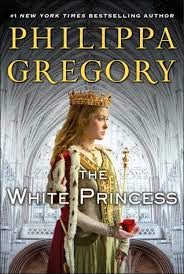
Kim's Review : The White Princess

"The White Princess" is currently the latest and last book in Philippa Gregory's "Cousins War" series. It tells the tale of Elizabeth of York - daughter of King Edward of York and Elizabeth Woodville and wife of  Henry Tudor (aka King Henry VII of England)

As daughter of King Edward of York with no known surviving brothers (the Princes in the Tower who went missing were her brothers), Elizabeth had the strongest claim to the throne. But Henry VII who defeated King Richard III (he was betrayed by his own allies) in the Battle of Bosworth, chose to claim his right to the throne by a tenuous claim of inheritance from John of Gaunt. So he crowned himself king, before his marriage to Elizabeth and only crowned her as Queen of England after their son Arthur was a year old.

Margaret passes on her own insecurities to her son, and Henry the VII having spent most of his life outside England in exile, has no one he can trust in his court other than his mother and uncle Jasper Tudor. Unfortunately for her, Elizabeth has inherited the York charm and the people of the country genuinely love her and the Yorks, which only makes her husband more suspicious of her and her intentions. Henry's paranoias soon get the better of him and his impoverished existence when in exile, makes him an avaricious tax collector, which makes him even less liked by the public.

The constant rumors of a surviving male York heir who was spirited away by his mother Elizabeth Woodville, keeps rallying the discontents in England to a new cause against King Henry Tudor and result in many minor battles. It is at this point of the story that Philippa Gregory finally introduces Perkin Warbeck who claimed to be Richard of Shrewsbury, Duke of York, the younger son of King Edward IV and missing brother of Elizabeth of York as a contender to the throne who is defeated and imprisoned by Henry VII. In her novel, Gregory believes that Warbeck was indeed who he claimed to be and his sister accepted it in secret, but due to the threat from her husband, she never acknowledges it in public. (a lot of contemporary historians also believe this line of thought, because of Elizabeth Woodville's support to his cause)

The book ends with the execution of Perkin Warbeck.

The glimpses of Elizabeth of York, that I had seen in The Red Queen intrigued me and made me really keen to read "The White Princess". However, the spunky Elizabeth of York who stood up to her future Mother-in-law Margaret Beaufort, is completely subdued in this book. Margaret Beaufort rules her son and England with a heavy hand and in Philippa Gregory's interpretation, Margaret is a complete terror to her daughter-in-law. The only person who can stand up to her is Elizabeth Woodville. The tyranny of her Mother-in-law and the suspicions of her husband, make Elizabeth of York a much more watered down character that I had expected her to be. But I guess, that was the only way to adhere to the historical facts, given Margaret Beauforts control over Henry and the Kingdom.

It's worth a read to complete the "Cousins War" Series and to get a continuity into starting the "Tudor" Series - The Constant Princess (Catherine of Aragorn)

Rating : 4/ 5


Also Read Kim's Reviews of the other books in Philippa Gregory's - "Cousins War" Series:
The Lady of The Rivers
The White Queen
The Red Queen
The Kingmaker's Daughter


Thursday, 21 November 2013

Kim's Review : Karna's Wife - The Outcast's Queen


"Karna's Wife - The Outcast's Queen" is Kavita Kane's first novel. Kavita is a journalist by profession, but she has chosen an extremely gripping topic for her debut novel.

Karna is often considered the most unfortunate and tragic character in the Mahabharata. Trapped in circumstances, not of his making, brought up by a charioteer, but with a higher calling, forced by fate and a friendship to fight against his brothers on the side of evil, tricked by Indra, Krishna and his birth mother into giving up his rights and celestial gifts. Cursed by Parashurama, a brahmin in deer form that he killed by mistake, Bhudevi - Mother Earth herself and his birth. With all these disadvantages weighing against him, he still fought the 18 day war at Kurukshetra and died a tragic death, stripped even of his righteousness by Krishna. Yet not much is known about his life, his line of reasoning and his perspective throughout this scenario.

This is what Kavita Kane, strives to enlighten us about in this book. While the title and the lead character in "The Outcasts Queen" is Princess Uruvi of Pukeya who chose to marry Karna in a Swayamvara, the tale Kavita tells is as much about Karna as it is about Uruvi. As far as I know, the Mahabharata mentions Vrushali, but not Uruvi. Shivaji Savant's epic work on Karna - "Mrityunjaya" also talks of Vrushali, but not Uruvi. Later Tamil literature talks of a wife called Ponnauruvi and this perhaps is the inspiration for Kavita's heroine.

"The Outcasts Queen" starts when Princess Uruvi, the only daughter of the King of Pukeya sets eyes on a God-like Karna when he enters the archery tournament in Hastinapur, but who is quickly rebuked and insulted about his low caste birth, until Duryodhana comes to his rescue (for his own selfish reasons) and crowns him King of Anga.

She falls in love with him on sight and at her Swayamvara while she is tipped to marry Arjuna, she actually chooses Karna in a dramatic opposite to the scenario a few years earlier at Draupadi's swayamvara.

From pampered and doted Princess, Uruvi now has to live her life as the second wife to an Outcast King, who is not even accepted as a Kshatriya. Aside from the humiliation she faces from the world, she also has to deal with resentment from Karna's first wife, suspicion from his brother Shona and awe and distance from Karna's adopted parents who really do not know what to make of her.

The only thing that sustains her is her love for Karna (and his for her) and implicit trust in his goodness, that is completely shattered with Draupadi's disrobing.

The story continues along the well known thread of the sequence in the Mahabharath, but this time from Uruvi and Karna's perspective, until Karna's death and the Pandavas & Lord Krishna taking Uruvi and Karna's son Vrishaketu under their wing.

*Spoiler Alert*
There were a lot of revelations for me in this book and I'm not sure whether these are actually facts from the original Mahabharata or gleaned from later interpretations or completely a figment of imagination on the part of the author.
1. Karna was married to Vrushali (from the charioteer caste) and had 7 sons with her, one of whom was killed at the melee at Draupadi's swayamvara.
2. Gandhari was tricked into marrying Dhritarashtra by Bhishma Pitamaha and this was what caused Shakuni's resentment, which he nurtured as hate among Gandhari's sons.
3. Gandhari tried to kill Duryodhana in her womb, when she realised that Kunti would have a son before her, making him the next in line to the throne. (although Dhritarashtra was older than Pandu, his blindness gave Pandu precedence to the throne. To prevent this erupting into a conflict, Bhishma Pitamaha was trying to get the eldest Kuru grandson to be Dhritarashtra's son)
4. Bhishma's refusal to be Commander in Chief for the Kauravas if Karna stepped on the battleground is often held to be  because he held Karna in contempt. But Kavita attributes it to Bhishmas realisation that Karna is a son of Kunti and he wants to prevent the brothers from killing each other.
5. The concepts of niyoga and pratiloma among others.
6. The introduction of Bhanumati as a character. As the wife of Duryodhana, she also presents a sligtly deeper insight in Duryodhana's character.
7. The allusion that Draupadi was actually in love with Karna and could not choose him at her Swayamvara because of external and familial complications.
*Spoiler Alert Ends*

What I liked about this book is the perspective it presents is quite new. We rarely get to hear Karna's side of the story.
A lot of information was new to me, but as I mentioned before, I'm not sure of its authenticity in terms of whether these facts are true to the original Mahabharath, if they came from later adaptations or if they are a figment of the authors imagination.
I completely agree with the authors (through Uruvi) viewpoint that Kunti was a manipulative b*&^%, as all the facts in the Mahabharath point that way.

The only thing that did not work for me in this book, was that the writing sometimes felt a bit stilted and the relating of of events so they tied in neatly with the chapter heading, left the sequencing a bit jerky to me.

Is it worth a read ? Well with recommendations by mythologists Ashwin Sanghi and Amish Tripathi on the front cover, could I disagree? The only name missing is Devdutt Pattanaik! :)

Rating : 4 / 5

Related Posts Plugin for WordPress, Blogger...