Showing posts with label Non-Fiction. Show all posts

Saturday, 7 November 2015

Brajesh's Review : Being Global - How to Think, Act and Lead in a Transformed World


I was gifted "Being Global - How to Think, Act and Lead in a Transformed World" after a guest lecture. The idea looked exciting and when I was called back to give a similar guest lecture to the next batch of participants, I decided to challenge myself and instead of going for the same content, I decided to use this new book by Angel Cabrera & Gregory Unruh as the straw-man for my next lecture.

I must say the frame-work was interesting and gave me a great thought to build upon. Having lived and worked outside of India for over quarter of my work-life, I was comfortably able to relate to most of the challenges and solutions outlined in the book.

It gave me rich material for my next presentation and you can get a quick glimpse of the book summary through my notes in the next picture. The book is a good guide for managers attempting to grow a global mind-set or for those who are planning to work in a foreign location for the first time.

I also found some good strong morally rooted suggestions for today’s leader around ethics and code of conduct which are increasingly becoming relevant in the modern business sphere.


Rating : 3/5


Sunday, 1 November 2015

Brajesh's Review : The One Thing


The starting premise of "The One Thing " looks overly simplistic, in today’s multi-dimensional, VUCA world, how can one achieve success by focussing only on one thing?

The essential logic being -taking Pareto’s 80:20 to the maximum. However as one goes through the chapters, the author beautifully dismisses many a standard myths to build his case. My personal myths were “multi-tasking”, “work-life balance” and “everything mattering equally”.

Post dismissing the myths the Gary Keller & Jay Papasan then build on the model in the second and third sections. I particularly liked the time management section, one of the best I have heard. Which advises to first block the vacation time, and then work between vacations.

While the book had limited appeal as a guide, it was a good read as counter-points and alternate success model.

Rating : 3.5/5

Saturday, 31 October 2015

Brajesh's Review : The Art of Thinking Clearly


Rolf Dobelli's "The Art of Thinking Clearly" is probably my non-fiction book of the year.

A collection of 99 articles by Rolf Dobelli, translated from German. This is probably the best collection of “social and cognitive psychological concepts” you can get in one place. Each of the short article deals with amazingly simple to understand but impossibly difficult to avoid concepts like “Contract Effect”, “Paradox of Choices”, “Endowment Effect”, “ Gambler’s Fallacy” and my personal favourite “Loss Aversion”.

The book is a good read for any student of human psychology and a must read for all marketers. In Depth, this book is no comparison to one of my favourite behavioural economics book “Thinking Fast and Slow” But what this book lacks in depth, it more than makes-up for in spread. I doubt you will ever find such an exhaustive collection of behavioural biases and easy to understand explanations of deep psychological concepts in one place.

Go buy it now, read over next fifteen days and then keep it next to you to use for life.

Rating : 4.5/5


Wednesday, 28 October 2015

Brajesh's Review : Sex Tips for Husbands & Wives From 1894


Sex Tips for Husbands & Wives From 1894 is a really funny booklet, which can be read in 10 minutes. In 1894, Ruth Smythers, ‘Beloved wife of The Reverend L. D. Smythers’, wrote: “While sex is at best revolting and at worst rather painful, it has to be endured... One cardinal rule of marriage should never be forgotten: give little, give seldom and above all, give grudgingly”

While the book may have been construed as practical advice in 1894, today it is rolling on the floor (ROFLOL) funny. It also turned out to be a perfect gift for a cousin getting married.

Rating : 4/5

Tuesday, 27 October 2015

Brajesh's Review : 13 Steps to Bloody Good Luck


Being a fan of Ashwin Sanghi from his first book “Rozabal Line”, I had to read his first non-fiction foray. Unfortunately I was quite disappointed.

While the book does try to de-construct luck through street wisdom, it lacked the depth of research to make it significant. After reading the book, you might have a brand-new notion on how to define luck, but it is more likely you will wonder if the construct isn’t a little far-fetched.

Separately the book could be a great source of lovely quotations and real-life stories which can be used by readers to turn their conversations interesting. When I had met Sanghi in London a few months back, I specifically asked him what made him drop his successful and masterly franchise of historical fiction to delve into non-fiction ? He told me that he wanted to get out of his comfort zone and continue his personal learning experience. It clearly enhanced my respect for the individual and I am sure, with such an attitude he will surely have more “Luck” in his coming ventures.

Rating : 3/5


Sunday, 25 October 2015

Brajesh's Review : Confessions of a Sociopath


Confessions of a Sociopath is written by a self-confessed and subsequently clinically-diagnosed psychopath woman, under a pseudonym - M E Thomas.

The book is an excellent commentary on the much-maligned diagnosis, normally associated with murderers & con-artists. It outlines that similar psychopathic tendencies are also required to be a successful politician or business leader.

Having spent close to two decades in the corporate trenches I can safely say that I have personally encountered more than one business leader who would fit the bill. The book also demystifies psychopathic tendencies which many of us will relate to. So even if you aren’t a full blown psychopath, you will surely relate to loads of behavioural and social traits. Recommended reading to all politicians, business leaders and amateur students of psychology like myself.

Rating : 3.5/5

Wednesday, 21 October 2015

Kim's Review : A Journal of the Plague Year


Daniel Defoe's - A Journal of the Plague Year - Being Observations or Memorials of the Most Remarkable Occurences as well Publick as Private which happened in London During the Last Great Visitation in 1665 - is one of the most difficult to read books, that I have ever picked up.

The subject matter itself is depressing - The Great Plague of 1665, the Language is a huge strain to read. And to compound it all, Defoe meanders, repeats himself, goes back and forth and his narrator HF is an irritating character.

However, because of Defoe's reputation as the founder of the English Novel, this Journal of a Plague Year is found on every must-read list compiled by newspapers and academic institutions, which I suspect is the only reason for its continuing sales.

I do admire Defoe for his actual novels - Robinson Crusoe and Moll Flanders among them, but the Journal inspite of all its literary significance, is most definitely not an easy read.

It definitely has its plus points : an eye for detail, a rich view of life in the 1660's for the merchant and the working classes and a perceptive eye for observation.

But the novel is also rambling, digressive, contradictory & repetitive. There are no sections, no chapters and the Death Bills are terribly depressing.

Since Daniel was only 5 during the plague, it is supposed that this book is based on the diaries of his uncle Henry Foe (HF). However, while he makes liberal use of statistics (The Death Bills) throughout the book, they seem to be made up for the most part.

It was this use of statistics, that had this book initially classified as Reportage and was accepted as the truth until the 1780's and eve had some people believing it as fact until the early 19th Century which should attest to the fact, that he accomplished what he set out to do.

However, this is not a book that I would recommend to anyone, unless the subject matter is extremely appealing to you.

#‎100BooksPact‬ 1/100


Saturday, 7 March 2015

Brajesh's Review : Read This If You Want to Take Great Photographs


Ansel Adams quote of “You don’t take a photograph, you make it” caught my attention, and I speed read Henry Carroll's "Read This If You Want to Take Great Photographs" at the book-store.

A simple book, without too much jargon and complexity touched all the basic aspects of taking good photographs. The beauty of the book is that it gives proper weight to non-technical aspects of photography which is often neglected. I would recommend all budding photographers to invest in this book, or you can just look at my notes in the photo collage


Rating : 4 / 5

Monday, 16 February 2015

Brajesh's Review : Girl Meets Boy


After being bowled over by Karen Armstrong’s “A Short History of Myth” I ordered two more books in the Myth Series.

Ali Smith takes the story of Iphis in which Telethusa metamorphoses her child to keep her alive, and turns this mythical narrative into a powerful feminist novel.

The protagonist Anthea goes through the realization of her lesbianism and finally marries the girl she loves. The counter point is her sister Midge who has a strong traditional outlook and struggles with capitalism and conventional relationships. The story is quite confusing in the first 30 pages where our personal gender stereotypes make it difficult to follow the narrative, but once you get comfortable with the style, the story moves at a fast clip and ends explosively.

Rating : 3 / 5

Wednesday, 7 January 2015

Brajesh's Review : It's Not How Good You Are, It's How Good You Want to Be


Paul Arden's "It's Not How Good You Are, It's How Good You Want to Be" is similar to Rhonda Byrne's “The Secret” kind of philosophy, where the power of mind is emphasized and a ton of common-sense wisdom is presented through fancy models and charts.

I speed read this book in about 20 mins and felt those were 20 wasted minutes. Not sure where they got the quote of “world’s best selling book” on the jacket, but if that is true, we do live in a seriously problematic world.


Rating : 2 / 5

Tuesday, 6 January 2015

Brajesh : Top 10 Books of 2014 – My Year of Non Fiction


A2Z Gift
Hi Friends, here is the list for 2014. Like last year, this has been culled out from my reviews and ratings , which you would have read through the year on my FB Album “2014 – Books (My Life Line)” or as part of the posts on the website maintained by Kim on “Kim and Brajesh’s Bookshelf“.


The usual disclaimers hold for the list.This compilation is from the books which I read in 2014. Hence the list is “my” list of favorites and by no means are a representation of any-kind except my personal interest and choice.

This has been an unusual year with respect to my reading pattern. I started the year with a bang, finishing 7 books in January and maintained a healthy pace till June, before peaking with 13 in August. Unfortunately the last three months have been unusually poor given our shift to London with only 8 books read over this quarter. Still, compared to the last year’s count of 57 a 64 in 2014 hasn’t been bad at all. Next year I will continue to push myself to an even larger no. However I am not setting any resolutions around the same. Finishing a yearly ritual (like this list) is oddly therapeutic and I must find newer ones, now that I am planning to give up the ritual around resolutions.

Interestingly the list this year consists of 7 Non-Fiction and only 1 each  from the Management, Fiction and Graphic Art Genre. This is a complete reversal from last year which had only 2 non-fiction representations. Not sure if this is a result of my interest moving to Non-Fiction or Non-Fiction giving me the better reads this year.

So here is the list in the ascending order of rank. A click on the title of the book will take you to a short review of the book.

10. Zona by Jeff Dyer [Non Fiction]. Totally utterly and completely nutty.

9. The Sceptical Patriot by Sidin Vadukut – Exploring the truths behind the zero and other Indian glories. [Non Fiction]. Need of today, more than ever before, a questioning mind.

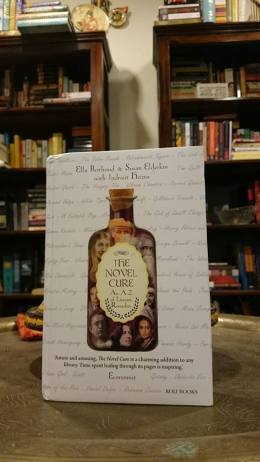
8. The Novel Cure – an A to Z of Literary Remedies by Susan Elderkin, Ella Berthoud and Indrajit Hazara [Non Fiction]. The “Gifting Book of the Year”

7. Stephen King on Writing :: A Memoir of the Craft [Non Fiction]. If you ever want to write, anything.

6. Adi Parva – Churning of the Ocean by Amruta Patil [Graphic Art]. “Graphic Art Book of the Year”. Check out the attached collage of a few pages, This is ART.

Adi Parva Sample

5. A Short History of Myth by Karen Armstrong [Non Fiction]. If you ever want to read another book on mythology or fiction, read this first.

4.David & Goliath – Underdogs Misfits & the Art of Battling Giants by Malcolm Gladwell [Management]. This is a management thriller, unputdownable.

3. Don’t lose your mind Lose Your Weight by Rujuta Diwekar [Non Fiction]. The best fitness book ever written.

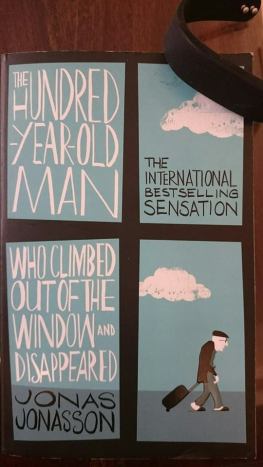
2. The Hundred Year Old Man Who Climbed out of the Window and Disappeared by Jonas Jonasson [Fiction]. This is speed of light story-telling.  “The Fiction Book of the Year 2014″
100 Yr

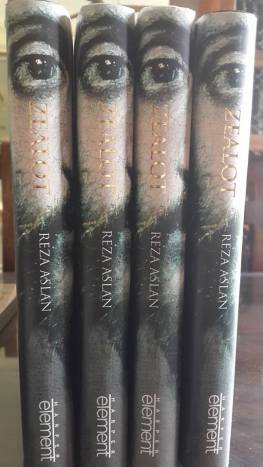
1. Zealot – The Life and Times of Jesus of Nazareth by Reza Aslan [Non Fiction] “The Book of the Year 2014″. In a world which is increasingly becoming less tolerant and where serious questioning is equated with insult and blasphemy, this is probably the book to start a questioning renaissance on religious beliefs. This one evaluates Jesus as a historical figure.
ZealotZealot 2

List consists only of +4.5 raters like last year.

Sholay – The Making Of a Classic by Anupama Chopra (Non Fiction-Film) is the only book which I rated 4.5 but got missed from the list above. This is because it was a re-read and due to the practicality of keeping the list count to 10.

Given the list above is so thin on fiction, find below Honorable Mention Fiction Top 5.
  1. Gone Girl by Gillian Flynn
  2. Ten Kings by Ashok Banker
  3. Worth Dying For by Lee Child
  4. Divergent by Veronica Roth
  5. The Bone Season by Samantha Shannon
Other Honorable Mentions (Top 3)
  1. Korma , Kheer & Kismet – Five Seaons in Old Delhi by Pamela Timms (Non Fiction – Food) My first ever food book, and I couldn’t have been luckier.
  2. Garbage Bin by Faisal Mohd (Graphic Art) I am now on FB subscription of Guddu. If you were born in 70s inthe Hindi-heartland, this is definitely for you.
  3. Mumbai Confidential by Saurav Mohapatra & Vivek Shinde (Graphic Art) I really discovered the graphic art medium this year along with the genius of Saurav.
This post will be incomplete without a mention of my friends who wrote books in 2014. You guys are rock-stars and my personal inspiration. If the readers want to buy any of the books below, just click on the link in the name.
  1. Bolllybook The Big Book of Hindi Movie Trivia by Diptakirti Chaudhuri
  2. A Mentor, a Novice and More Cups of Cappuccino by Subrat Padhi
  3. Blissful Discontent by Pritha Lal
As a rule, I don’t rate books by friends.

I end the post with a hope that if this list helps even one person to chose his/her next read I would be delighted. I know a few friends who give credit to my past annual lists as a helping guide in their reading journey, it is thanks to you all that I continue the tradition.
See you again in 2016 January with the next installment …

Friday, 21 November 2014

Brajesh's Review : Raja Ravi Varma - Oleographs


This is a collection of Raja Ravi Verma’s lovely Oleographs, which we picked up at the Baroda Museum’s shop. For a small sum of 500 INR, we now have a collection of Ravi Verma’s on which one can spend hours reflecting and picking up nuances of some fairly well known paintings from Indian mythology.

The pick of the collection for me were from the not so popular paintings of Shiva with moustache, Ganesh with his two wives and a lovely rendition of Saraswati. Enjoy a sneak-peak of the collection in the next picture


Rating : (Unrated)

This particular collection was available at the Laxmi Vilas Palace at Baroda and are prints of the Palace Collection. I'm not sure if it is available anywhere other than at this location. However, there are a few other books on this painter that can be easily bought and there are some links below.

Wednesday, 22 October 2014

Brajesh's Review : Brand Vinci - Decoding Facets of Branding


(2.0/5.0) I had a couple of hours to kill at Mumbai Airport and "Brand Vinci - Decoding Facets of Branding" by Pavan Padaki, was under the best seller section of the book-shop. I am still wondering who decided to put it there.

It is a thin book of around 80 pages with an attractive cover. Unfortunately the only think good about the book were the sketches on graphic pages.

The content was quite useless and it took me less than 30 minutes to finish the book, in which the author tries to explain the basics of brand management through its 5 legs of purpose, perspective, positioning, properties and protocol. Unfortunately the brand model as well accompanying examples of the five legs are both poor in quality and give no insight into brand management.

Avoid this book, but if you have 5 minutes to spare, you can flip through the 5 pages of graphic art in the book at any book-shop. To ensure you don’t waste your time on this book, I have attached a collage of these 5 pages for you.


Rating : 2 / 5

Wednesday, 15 October 2014

Brajesh's Review : Dream Angus - The Celtic God of Dreams


Another book in the Myth Series, where Alexander McCall Smith follows the Celtic god of dreams Angus and his transformation through the book. Interwoven are a few other stories of love, eroticism, betrayal and revenge. The strength of the book is in the imaginative scale and like a good myth leaves you with your interpretation.

Still, Dream Angus is not amongst my favourite Alexander McCall Smith.

Rating : 3 / 5

Monday, 1 September 2014

Brajesh's Review : Korma, Kheer & Kismet


Part history, part memoir, part recipe book, part social commentary and part diary is probably the most apt description of this book by Pamela Timms. My wife handed me this book with a strong recommendation, knowing my interest in history, Old Delhi and food.

Pamela has combined her strong knowledge of food with an equally in-depth understanding of “Puraani Dilli”. The characters are colorful and textured, the stories rich and flavored, descriptions vivid and spicy.

Overall the book is satisfying and tasty like a wholesome home-cooked meal. I read the book over one sitting and now have a list of over 15 places which I would like to explore in Old Delhi.

For now "Ashok & Ashok" Korma sits right at the top.

Rating : 4 / 5

Also Read : Kim's Review of Korma, Kheer & Kismet

Saturday, 30 August 2014

Brajesh's Review : A Short History of Myth


The title and size (149 pages) of this book - "A Short History of Myth" by Karen Armstrong, are both misleading. This is not a quick read at all. This is a book which expands horizons, gives perspective, questions history and addresses the issues of post-modern world through the lens of Mythology.

The book is a part of  the "Myth Series" similar to “The Good Man Jesus and The Scoundrel Christ” written by Phillip Pullman.

This book was published the same day in 33 countries in 28 languages, in what The Washington Post called "the biggest simultaneous publication ever.

The book begins with a simple example of a Neanderthal grave. Using this Karen outlines the 5 core threads of a Myth.
1. It is about DEATH and beyond
2. RITUALS are integral
3. Works at the EDGE of experience
4. TELLS us about living practices and the
5. PERENNIAL Philosophy.

The book then takes us from 20,000 BCE to year 2000AD across 5 section of history. Each section is separated by a significant change in human evolution and corresponds with evolving themes of Myths. It is amazing to see the principles of Myth-making holding true over such a large historical commentary.

While I hate to mark my books, I read this book like a text book and the accompanying picture of my notes will give you an idea on how much there is to absorb in this so called “short history”. I quote from the jacket of her other book “History of God” which has been on my shelf for some-time: the perfect summary for this book. “Karen has the dazzling ability : she can take a long and complex subject and reduce it to its fundamentals without oversimplifying”.

I am filled with total and utter reverence for Karen and her writing. If you are not the reading type, I would still recommend you to spend 20 mins on her TED talk titled “The Charter for Compassion”.

The most amazing section for me in the book was the last chapter corresponding to 1500-2000 AD. In this section Karen laments the death of Mythos at the altar of Logos. Then summarizes beautifully by writing “using reason to discuss the sacred is like trying to eat soup with a fork”. Logos can tell us What & How, but it is only Mythos that can answer the broader bigger and existential question of Why.

The only reason the book doesn’t get a perfect 5, is the sheer weight it demands on ones intellect and can never be recommended, even to a casual reader of non-fiction.

Rating : 4.5 / 5


Friday, 29 August 2014

Brajesh's Review : My Passage From India


"My Passage From India" is the life story of Ismail Merchant - from a school boy in Bombay to one of the biggest producers in Hollywood. From an struggling producer to one half of the legend of Merchant Ivory Productions.

This book has all the ingredients of a blockbuster film. The book feels like a perfectly cooked biryani which is balanced, sumptuous and wholesome at the same time. Not surprising, given Ismail Merchants fondness for good food and cooking.

The book is filled with beautiful stories, larger than life characters and sweet anecdotes, but the narrative still remains fast paced and light. The photographs are beautiful, like any Merchant Ivory period drama and so is the layout.

While I had watched "Heat and Dust" as a child on DD and "Cotton Mary" a few years back on a flight, my lack of interest in period dramas had deprived me of the magic of Merchant Ivory. This book has ensured that I will go back and finish the collection of Merchant Ivory's 5 Movies which we had picked up over 5 years back.

Rating : 3.5 / 5

Also Read : Kim's Review of My Passage From India


Wednesday, 20 August 2014

Kim's Review : The Taste of Words - An Introduction to Urdu Poetry


The blurb for Raza Mir's "The Taste of Words - An Introduction to Urdu Poetry" read as "Have you ever been enchanted by the spoken cadence of an Urdu Couplet but wished you could fully ubderstand its nuances? Have you wanted to engage with a ghazal more deeply, but were daunted by its mystifying conventions? Are you confused between a qataa and a rubaai, or a musaddas and a marsiya?"

This book was supposed to help me with all 3, but unfortunately it only helped me understand the answer to the last question.

Don't get me wrong, this is a book that has been researched with a lot of love and passion by Raza Mir and I do appreciate it. The first 26 pages which give an introduction to Urdu poetry and a Note on the Poetic Forms is brilliant and I wanted more of it.

However, the bulk of the book was where I was disappointed, because of my expectations.

I learned Hindi late in life (in my 20's) to be able to converse with people in college, at work and then with my inlaws, so my knowledge of Hindi is restricted to the colloquial. I do understand a fair bit of Sanskrit, because halekannada / the classical Kannada (which I learned academically until my graduation) is deeply rooted in Sanskrit (like most Dravidian languages)

So when it comes to Urdu poetry, I love the lyricism, the cadence, the beautiful descriptions, the rhythm - I love everything about it, except I only understand about 50% of it. I was hoping that this book would help take that percentage up a bit further.

However what this book did, was explain to me the technicalities of how Urdu Poetry is classified, it gave me a bit of insight into the History of Urdu as a language (and the multiple events that were portended to bring about its death), it introduced me to a multitude of Urdu poets - some of whom I had heard of, but most of them were a new discovery. The mini biographies included with each, were enlightening.

What Raza Mir has done is assembled a collection of 47 famous Urdu Poets, chosen certain couplets (around 150 poems) from some of their famed works (or his favourites) and then translated them. However, except for a few free verse translations, he has tried to maintain the rhythm and rhyming. He confesses that he internally debated a lot on this point, before choosing this route.

However, for my understanding, I would have preferred a more literal translation with a little note on the double meanings / play on words etc of individual poems.

Rather than a standard transliteration scheme, Raza Mir has chosen a vernacular format, that is easy to read for those accustomed to reading the Devnagari script in English. However, it would be a difficult read for those unfamiliar with this.

This is not a book that can be read at one sitting. There is so much Philosophy and Mysticism in these poems, that each one warrants some reflection.

I commend the author for the amount of work that he has put in, into this book, however it wasn't suitable to what I was looking for and did not help me too much with nuances, which is why I have given it a lower rating.

Rating : 3 / 5

Tuesday, 19 August 2014

Kim's Review : Korma, Kheer & Kismet - Five Seasons in Old Delhi


I first heard of Pamela Timms, when I had just returned to India in December 2010. We were posted to Delhi and by February 2011, I had connected with local foodies and heard rave reviews of her Upar-Wali Chai's - the pop-up High Tea Parties - that she used to organise with her friend Laura. Sadly, by the time I could contact her, Laura left for the Netherlands and these pop-ups came to a full stop and I had to satisfy myself with drooling at the pictures on her blog - eat and dust.

Baking is something that is stressful for me as I am too much of a rebel at heart, especially when it comes to cooking. I'm more comfortable cooking by andaaz (touch, smell and feel), than in following exact measurements. I happily "adjust" recipes from blogs and recipe books when I cook for ourselves, but you see the potential for disaster when it comes to baking? Hence the need to be satisfied with drooling at pictures.

Pamela Timms is a Scottish Journalist who has been living in Delhi since the last 10 years. In 2005, her husband Dean moved to India as a foreign correspondent and she and their children accompanied him.

I saw so many similarities in Pamela's life as an expat in Delhi, with my life as an expat in Cairo and perhaps this is why I connected even more with the book. Except for the food, the monuments and the history of Delhi, there is little else that I love about the city (its just too aggressive, rude and in-your-face for me, I'm happier in a Bangalore, Pune, Hyderabad or Mumbai than Delhi. Even living in Guwahati and Ahmedabad has been a 100 times more pleasant)

By a strange coincidence, the last book I read was : Ismail Merchant's - My Passage From India - and in that he recounts how one of the Rejection Letters that he received from a studio for their movie "Heat and Dust" (based on Ruth Prawer Jhabwalla Booker Prize Winning novel of the same name, the movie later won a BAFTA and was nominated for 7 others) was "we are not currently interested in your project of eat and dust" Mr, Merchant wasn't impressed with the production house getting the name of his movie wrong, but it has proved to be an apt name for Pamela's blog that is currently extremely popular.

Another strange connection between these 2 books is that Merchant Ivory productions, produced 3 movies based on books by E M Forster - A Room With A View, Maurice, and Howards End and Pamela was inspired by the heroine of another E M Forster Book - "A Passage to India" that she read shortly before she moved.

After a couple of disastrous rental accommodations (which made it difficult to cook) and the extra attention of being a fair skinned expat in Delhi (constantly besieged with "you want maid?", "you want driver?" and once even being bundled into an autorikshaw by policemen, when all she wanted to do was walk!), she found a refuge (from the stifling Expat Bubble of New Delhi) in Old Delhi.

To paraphrase Pamela, the people of Old Delhi were too busy with their business and their lives to give them any extra, unnecessary attention. Each one was caught up in their own routine and treated them as just another customer. Old Delhi was a sensory overload, but left them exhilarated. (I know the feeling: wandering around the Khan el Khalili in Cairo, in a long sleeved kurta and jeans, with my basic Arabic - as long as I didn't get into a conversation - I blended in as a local and was pretty much left alone to explore the area on my own whims.)

I completely empathise with and understand Pamela's experience of cooking Roast Chicken with Pasta and Tomatoes (an excellent recipe by the way), I've been through it myself.

In Egypt and Dubai (or even Mumbai or Bangalore), when I had a dinner party at home, I just had to visit one large hypermarket and get everything I needed from there. In Delhi, it was a trip to a large supermarket to buy staples, one to Godrej Nature Basket in Def Col to buy boneless meat, imported ingredients and cold meat, INA market for fresh fruit and vegetables and Jor Bagh Market for pork. This is manageable (except for the time taken to get from place to place) as long as you go with a fixed menu in mind and a list of ingredients, but a bit of a toughie for someone like me who looks at ingredients (which are the freshest and the most inspiring?)  and then decides what to cook. This turned out to be more of a mystery box challenge for every dinner party - as I never knew what I would get at the next shop and whether it would match with ingredients I had already picked, to make up a cohesive meal.

But this review is not about me, so to come back to this brilliant book :  Korma, Kheer and Kismet - Five Seasons in Old Delhi - is a a beautiful food memoir of Old Delhi / Puraani Dilli / sheher.  The book has history, culture, food, travel, recipes (just about 14-15) and personal stories all woven into each other. I absolutely LOVED it - if I ever get around to writing a book, this is the book that I would aspire to emulate, it has captured all my favourite interests.


I read this over last weekend and I loved it so much that I gave it to Brajesh and asked him to read it immediately and he also finished it at one shot. While he promised Rushina, that hers would be the first "food" book that he would read, he just read through the introductions of each chapter in "A Pinch of This, A Handful of That" and skimmed over the recipes. In "Korma, Kheer & Kismet" he again skimmed over the recipes, but as it is more memoir than recipe book, he felt that he had actually "read" it. He is now fixated on locating "Ashok & Ashok" on his next trip to Dilli.

As I was reading this book, I found that I was marking a few statements and underlining the names of restaurants and locations and other food writers mentioned in the book. Then I realised that this was the first time since college that I was doing this in a non-management book. (I hate having my books marked permanently in any way, I prefer to use post-its for the occasional note.) This is just a sign that I valued and wanted to emphasise all the new things that I learned in this book - even if it was just the name of a dhabha in Amritsar - but it serves the best cholle bhature in the world.

There is so much depth in this book

- a depth of knowledge of Indian food - Pamela is not just another "visitor" to India, penning a book after a 2 week holiday in the country, she has spent time, energy and effort into researching the topics that she writes about.
- a depth of research - into the families and people cooking up old favourites in this part of the City and into the history of food in general.
- a depth of passion and love - for food and the Old City.

My only issue with this book is the pictures. Being spoiled by the gorgeous technicolour / HD photos on her blog, the Black & White pictures in the book are a disappointment, some of them have become very blurry in grayscale. I understand that printing colour photos in a book, raises costs significantly, but I think a lot of them would have been better off as a link to a colour photo on her blog than as a grainy image in grayscale.

A lot of my Delhi friends have read this book over the long weekend and are already planning an eating expedition to the Old City, while also keeping Rahul Verma's tips for the monsoons in mind

Charmaine O'Brien's - "Flavors of Delhi" is much more comprehensive and wide in its spectrum, but Pamela's book has a ton of passion - which clearly makes it a much more emotional and enjoyable book.

If you like (notice I don't say love) food and live in Delhi or are visiting Delhi, this is a book you MUST read. Its also a beautiful gift for someone moving to Delhi.

Rating : 4.5/ 5

Monday, 18 August 2014

Kim's Review : My Passage From India


"My Passage From India" is the autobiography of Ismail Merchant - the famed Indian film director and producer who made it big even in Hollywood, earning 4 Oscar nominations and winning 2 BAFTA's. He was one half of  Merchant Ivory Productions with James Ivory being the other.

Their partnership has a place in the Guinness Book of World Records for the longest partnership in independent cinema history lasting over 44 years and spanning over 40 films.

Ismail Merchant was the producer of movies like "Remains of the Day", "Heat & Dust", "Howards End" and "A Room with a View". He even directed a few including "Cotton Mary", "The Mystic Masseur", "The Proprietor" and Documentaries like "The Courtesans of Bombay" and "Lumière and Company"

As a rule, I'm not a fan of autobiographies, but having watched a few of his movies and loving his cookbook "Ismail Merchant's Passionate Meals", when I saw this book at the library of the place we were staying at, I picked it up to just browse through it. However, after reading the first few pages, I was completely hooked.

The story of his life is beautifully written with humour and every incident is so vividly retold that it paints a picture for the reader, its almost like watching his life on a screen. That's how powerful his words are.

While he does try to underplay his origins and make them seem disadvantaged, he did grow up in an upper middle class family. His father was a textile dealer in Mumbai, who was quite active in politics (as President of the Muslim League) and they had family connections in the movies (It was Ismail's fascination with family friend "Nimmi" - one of the most popular actresses of yester-years, that sparked his undying interest in cinema. As the only son of the family with 6 sisters, he would also have been completely indulged.

He studied at St Xaviers in Bombay (the top college of those times) and then proceeded to New York University for an MBA. While he did show early signs of entrepreneurship and chutzpah while in India, it was living alone in New York which made him come into his element.

What might seem dishonest tactics that could result in being sued for millions in today's day and age, were stepping stones for him in his early life. And in most cases they seem to have won him admiration or amusement of those concerned.

For eg : he got a job as a messenger / guide for Indian Delegates to the UN in New York through the Indian Consulate by claiming that he knew the city very well, when in fact, he had barely gotten off the boat himself. He then charmed one of the Brazilian secretaries to introduce/announce him as a delegate whenever he was entertaining "important' guests. And he wined and dined people whom he felt could help him in the movie business (in any capacity) at the delegate lounge of the UN, by posing as an Indian delegate.

When the delegation returned to India, he visited the Indian Tourist Centre to check if they had any vacancies and this is where he met Saeed Jaffrey. Although there were no jobs available, this meeting led to a lifelong bond between the 2 and Saeed's then wife Madhur Jaffrey whom Ismail was later to cast in important roles in "Cotton Mary", "The Perfect Murder", "Heat and Dust", "Guru", "The Shakespear-wallahs" and "Autobiography of a Princess"

Saeed narrated Ismail's first documentary "The Creation of Woman" and was also instrumental in introducing him to James (Jim) Ivory (for whose documentary "The Sword and the Flute" Saeed had also provided the voiceover) who went on to become Ismail's Business and Life Partner.

Ismail does not elaborate too much on his personal relationship with James Ivory in this autobiography, except for a few stray hints of a relationship between the two.

Ismail was later known for the personally cooked meals that he dished out to his cast and crew. He says that it was his way of acknowledging their sacrifices, especially when working on films with as tight budgets as the Merchant Ivory Productions. But his first attempt at cooking, is beautifully described, even though it was done out of sheer necessity (of constrained budgets and the need to stand out to actors and financiers that he was wooing.) By the end of a couple of years, a lot of people agreed to work with him, just so they could partake of his famous meals. While initially he cooked ad hoc as needed, the End-Of-Week Curry Party was initiated during the shooting of "The Savages" and he even opened a restaurant in 1993.

The book is littered with trivia and is a delight to read, especially if you are familiar with the main characters of Hollywood and Bollywood in those early days. His meeting with Sigourney Weaver, when trying to cast her for "The Bostonians", has her father (Pat Weaver - Ismail's First Boss from McCann Erickson - Chairman of International Division) recounting their own first meeting, when Ismail moved from New York to LA and had a friend publish an extremely glowing article about him in the New York and LA newspapers.

Their first introduction to Ruth Prawer Jhabwalla and her husband Cyrus (who was convinced that they were charlatans) happened when they were trying to convince her to give them the rights to translate "The Householder" onto film. They also managed to convince her to write the screenplay and she went on to become their script writer for many more movies after. She was initially reluctant as she had never written a screenplay before, but they said that it wouldn't be a problem, since Ismail had never produced a feature film before and Jim (James) had never directed a feature film before. Ruth later went on to write the Booker Prize Winning "Heat & Dust" which they also translated onto film.

What is really touching in this book, is the humbleness of one of the Greatest Indian Directors - Satyajit Ray who often helped them without any expectation of anything in return. He introduced them to his cinematographer Subrata Mitra and recommended that he work with them. He edited their first Feature Film "The Householder" for free, and with the agreement that they could discard any changes that they did not like. He helped get their film into the Berlin Festival, where one of his own films was in contention. Of course they were grateful for all this help and were finally able to repay this immeasurable debt, by lobbying for (and succeeding) a Lifetime Achievement Award for him at the Oscars.

Shashi Kapoor and Jennifer Kendall were like an extended family to him and it was Shashi who introduced him to wine "If you have never tasted wine, then you have wasted your life"

Utpal Dutt being arrested for putting on Anti-Communist Maoist plays in Bengal just before the start of shooting of "The Guru", and being temporarily released into their custody by the Government of West Bengal, until the end of shooting on the assurance that he would be returned to jail at that time.

It is bits of stories like this, that make this autobiography so interesting.

There is so much more insight into the movies that they made, that I would need to re-watch those that I have seen before and I now have a long list of movies that I would like to watch. I have also added a lot of authors to my "Must-Read" list, based on his impressions - Jean Rhys, Henry James, John Cheever, E M Forster, Harry Keating, John Masters and Anita Desai.

While Merchant-Ivory achieved the pinnacle of success with their Oscar nominations, they also had their share of detractors. Peter Biskind's book, Down And Dirty Pictures, records that Quentin Tarantino, before the first ever showing of his ultra-violent gangster movie Pulp Fiction (1994) bounded on to the stage, asked those in the audience who liked "The Remains Of The Day" (set in the 1930s, with Anthony Hopkins as the repressed butler, struggling with his feelings for Emma Thompson's housekeeper) to raise their hands, and then pointed to the exit, yelling at them: "Get the f*** out of here!"

But, Ismail Merchant also won multiple accolades along side. In 2002 he received the Padma Bhusan from the Indian government and in 2003, he was made an honorary fellow of the BAFTA and received the Commandeur de L'Ordre des Arts et des Lettres in France.

This book was printed in 2002 and sadly Mr Merchant passed away shortly after in 2005. The spirit of his life and his autobiography can be summed up in his own words : "There is nothing to lose by asking and I have become seasoned in this practice, although I still find a refusal very hard to accept"

Its a lovely book and I heavily recommend it.

Rating : 4.5 / 5


Related Posts Plugin for WordPress, Blogger...