Wednesday, 26 June 2013

Brajesh's Review : The Missing Queen


"The Missing Queen" calls itself a "speculative thriller". I would prefix "mythological" to make it complete.

Samhita Arni's book is set 10 years post Sita's banishment by Rama. The twist comes with the time landscape. This book is set in a period which feels like 1990s but with a little imagination could very well be any decade post Independence.

This is my first "mythological speculative fiction" and I must say that I am already a fan of the genre.

Samhita obviously has a great command over epic retelling, as her earlier titles indicate. In "The Missing Queen" she raises a host of questions, relevant for modern society against the Ramanyana backdrop. This is her real success, as I always felt Ramayana was a little too moral and too correct a narrative to be made relevant for Kaliyug in comparison to the Mahabharata.

This book shattered that belief for me and gave me an exciting peek into the possibilities Ramayana also has in store. If you belong to the section that gets offended by "Ramanujam's - 300 Ramayanas" kind of essays then this one isn't for you.

I totally loved it.

Rating : 4 / 5


Tuesday, 25 June 2013

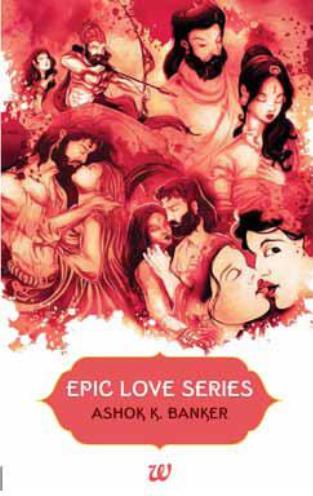
Brajesh's Review : Ashok Banker's - Epic Love stories


2. Ganga & Shantanu - A love story written on water

3. Satyavati & Shantanu - A love story made possible by a son's sacrifice

4. Amba & Bhishma - A love story that was never meant to be

Three novellas from a 5 part series by Ashok Banker, are soft and romantic in the narrative and pick up episodes from the early history of Mahabharat. I found the description of Ganga's life and battle of Bhishma with Shalva particularly fascinating. This is an excellent attempt by Ashok Banker to hook the modern young reader onto the greatest story ever told. Keeping romance at the core, with beautiful graphics on the cover and an easy narrative, contained in 75 pages is just right for the young readers. Though I feel these could have been priced at sub 100/- MRP (currently at 125/-) to wean young readers away from Chetan Bhagat & Ravinder Singh !!!!


Rating : 3 / 5


Monday, 24 June 2013

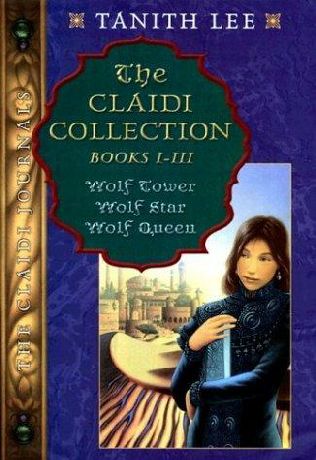
Kim's Review : The Claidi Journals - Wolf Tower, Wolf Star, Queen of the Wolves, Wolf Wing


Tanith Lee is the first woman to win the British Fantasy Award best novel award (also known as the August Derleth Award), for her book Death's Master. Having read the first 3 in her Claidi's Journals series, I was definitely not surprised to learn this.

Tanith Lee, is not an author I had heard about, when I was growing up. However at a recent Strand exhibition, I chanced upon "The Claidi Collection" -  the first 3 of the Claidi Journals. I picked it up to gift to a friends daughter because the series seemed interesting.

We normally only gift books to kids, and mostly they are books and authors that I have already read. However, when I pick up a new author, I do like to skim through the book before gifting it to a child, to make sure that the content is age appropriate.

But once I started skimming through Wolf Tower, I was forced to slow down and read it in detail. I actually read all 3 books at a stretch and finished them in a day and now I'm wondering how to get my hands on the 4th in the series - Wolf Wing, which does not seem to be available in India.

The books are the journals of Claidi, who has stolen a book and sporadically writes in it, in the hopes of corresponding with a reader seperated by time and space.

In Wolf Tower, Claidi starts out as a serving girl to the spoilt Lady Jade Leaf (daughter of Princess Shimra) at the palace-city called "The House" where life is governed by an elaborate series of rituals. Everyone who lives in "The House", believes that the land outside their walls - "The Waste" - is poisoned and dangerous and that is where people who do not respect the important Rituals of "The House" are exiled to.

One day a handsome stranger - Nemian - arrives at "The House" in a hot air balloon and since he comes from "the Waste", he is immediately imprisoned and Claidi's life changes forever. Claidi is commissioned by one of the Old Ladies (the most ancient Princesses) - Princess Jizania Tiger to rescue Nemian and accompany him to his own land. She also reveals to Claidi, that she is actually the daughter of a Princess of the House, who was exiled for falling in love with her steward and having a child with him - Claidissa Star. Her parents were exiled to the waste and the child was sentenced to a life of harsh service.

Claidi, embarks on the journey with a sense of adventure and having rescued Nemian, finally sets foot beyond the walls of the House and the Gardens and enters "the Waste".

Since Nemian's balloon was damaged they have to find new ways to commute and their journey takes them to strange lands. Like that of the Sheepers who communicate in the same language as their sheep, the Feather tribe who worship birds, the Peshambans who worship their clock, Alligator Riders and the bandits.

A large part of their journey is along with the bandits and Argul, the Leader of the Bandits falls in love with her. But Nemian makes a last minute desperate plea to Claidi, to not leave him and continue the journey onwards to his own kingdom - "The City"

However, "The City" is not at all what Claidi had expected and Princess Ironel Novendot tells her that she was brought there for a reason - to be the interpreter and keeper of "The Law" - The "Wolf's Paw".

I'd rather not add anything more about the story line from here, because it will ruin the pleasure for someone who hasn't yet read the books.

Wolf Star and Queen of the Wolves, take Claidi into even stranger lands and she keeps discovering more about herself and her identity.

In this series, Tanith Lee take religion out of its normal real world constructs and creates an entire series of religions for each group of people that we encounter on Claidi's journey. So the debate on religion takes an entirely different twist and its easier to debate without falling into familiar patterns of normal religious debates. This is one of the features that has been praised by critics of the series.

The books are also a great way to start a dialogue on morality. Because not all the characters are purely black or white. Most of them have shades of grey. Tanith Lee gives insight into their motivations and this can further aid discussions on morality.

Even if you do not want to get into such discussions, the series are filled with magic, technology and fantasy, so they can be easily read as just another absolutely fascinating tale. Her attention to details regarding construction of housing, costumes, language just add layers of depth to the story without getting too descriptive - a fine balance to achieve.

What I really loved about the books was that, while Claidi is naive and easily misled, she is also extremely strong willed once she decides on a course of action. So she is quite a strong role model for young girls who are the target audience of this series. Claidi's reactions to events and situations are believable and heroic when needed.

The writing just flows and takes the reader on a fantastical journey, with more bombshells being dropped every few chapters, so it really keeps you turning the pages.

I heavily recommend this book for young teenage girls. There is a little romance in the books, but its dealt with very well, so the books can be read by young teens and enjoyed by older teens as well.

Rating : 4 / 5 (for the target audience)


Brajesh's Review : Chronicle of a Death Foretold


JLF 2013 introduced me to Gabriel Garcia Marquez. This is the first of his books that I have read and the second one has already reached home. How can a story hold you for 120+ pages when the plot is laid out completely within the first 5 pages itself ? This is the marvel of this inverted narrative.

Opening up layers and layers of human behavior through rapidly moving side stories is an interesting construction. Though this got a little heavy for me, due to complex Colombian names and my unfamiliarity with the context.

Anyway one feels inadequate to critique the work of a Nobel Laureate, so 4.5 it is . Can't wait to start "Love in the Time of Cholera".

Rating : 4.5 / 5


Saturday, 8 June 2013

Kim's Review : Oath of the Vayuputras


The Final installment of Amish Tripathi's Shiva trilogy.

For me, this books focus was overly skewed towards Geography and war strategy.The story seemed to take second place to these themes and the tying up of all lose ends. I guess the problem was that I was hoping for another Secret of the Nagas where the story telling moved forward at a brisk pace and was completely engrossing.

While all the lose ends were effectively closed, I kept wanting more. There was nothing missing in Oath of the Vayuputras, but it just doesn't live up to Secret of the Nagas.  I guess this is the problem with trilogies and series, not every author can be a George Martin or Tolkien whose each book keeps surpassing the previous one.

The best part about Amish's stories is how he adapts legends and twists the stories to make them more plausible. The best example of that is in this book, in the episode on how Sati dies.


Part 3 is not as enrapturing as part 2, but its definitely worth reading, because whatever said and done he is a good storyteller. So its a good thing that Amish has already signed up his next book deal, even though he isn't sure what he is going to be writing about.

On a side note :
It seems the translations are equally good. Brajesh's parents are currently reading the series in Hindi and are eagerly awaiting the translation of Oath of the Vayuputras.

Rating : 3.5 / 5

Also Read:

Kim's Reviews :-
The Immortals of Meluha
Secret of the Nagas

Brajesh's Reviews:-
The Immortals of Meluha
Secret of the Nagas
Oath of the Vayuputras


Friday, 7 June 2013

Kim's Review: Once Upon the Tracks of Mumbai


Last month, Rishi Vohra contacted me about his first novel "Once Upon the Tracks of Mumbai" and requested if I could review it on our blog. I took one look at the cover and was immediately apprehensive that it was just another one of the "love stories" being churned out by debutant Indian authors today. While the genre is extremely popular and sells well, it is not a genre that I choose to read.

Rishi, assured me that his book did not fall in that category and sent me a copy. Being busy for the last month, I just did not have any time to read. But I started reading "Once Upon the Tracks of Mumbai" last evening and ended staying up half the night until I finished.

The main protagonist is Balwant Srivastav - Babloo - who has multiple psychological issues including Attention Deficit Disorder, autism, psychosis, schizofrenia and a second voice inside his head (that hasn't graduated to a split personality), but for me the setting of Bandra was an equally dominant character in the tale.

I hope a lot of young high school and college girls read this book, because they need to realise that not all men out there are dashing young knights on white horses waiting to sweep them off their feet, there are quite a few Sikanders in this world too and caution is good.

The writing style is easy to read. The first few chapters start a little slow, but then the book really picks up speed, veering off in unexpected directions.

My only criticism of "Once Upon the Tracks of Mumbai" are that Babloo's second internal voice hardly appears twice or thrice in the story and the ending is a little too neatly tied up to be realistic, which was a little unsettling, given how well Rishi has captured the gritty reality of life in average middle class Mumbai.

It is easy for the reader to sympathise with Babloo, Vandana and in a strange way, even with their respective parents. It speaks of a skillful author who can make the reader sympathetic to multiple points of view.

"Once Upon the Tracks of Mumbai"is a well told tale, very realistic and it exposed a part of Bandra which was a completely new revelation for me - right from the Railway officers colony, to what happens along the railway tracks - inspite having traveled on the Mumbai locals during the 2 years, across multiple stints that I've lived in the city.

Its a book that's easy to read, even if English is not your first language. Its ideal for carrying along when traveling or reading under the desk in a college classroom :)

Rating : 3.5 / 5

Friday, 17 May 2013

Kim's Review : Kitchen Venom


When I came to know that Philip Hensher would be at JLF 2013, I started looking into his books. Kitchen Venom was touted as the Winner of a Somerset Maugham Award 1997. A stunning novel of political life, betrayal and passion, which lifts the lid on vice within the Palace of Westminster…and cost Hensher his job as a House of Commons clerk

So I was most certainly hoping for some juicy British political gossip. However, since all names are masked, it would only make sense to someone well informed of Margaret Thatchers government and its constituents.

The story revolves around a hunchbacked Westminster clerk John, his 2 daughters and the people he interacts with and his proclivity for rent boys.

I found the book extremely slow and melancholic. It took me quite some time to get used to Hensher's style of writing which includes so many double and triple negatives, that the reader often has to read the same sentence at least twice to decipher the intent of that statement. For eg : "Had he been unhappy? Or was it simply that, now that his life was more full, he was aware, retrospectively, that his before-life was not upto much? What Henry thought, he could not say to Francesca. He thought that perhaps he could not have been unhappy and not known it. Because unhappiness depends on one knowing it. And if he, had been unhappy without knowing it, there was no reason that he might not be unhappy now, without knowing it"

The book is almost lethargic in its pace and hardly moves forward. Each character is caught up in their own ennui and resistance to change of any kind. I could not identify or sympathise with the characters of either Jane or Francesca. Their presence was practically like an unremarkable picture on the wall. Occasionally commented upon, but making no difference to the lives of people they touched, if they made the effort to touch any people at all.

Seeveral times while reading this book, I questioned myself as to why I continued to read the book, even though it was a difficult read that didn't' seem to be headed anywhere, but something in the book, made me keep reading or maybe these are just the starting signs of OCD. (not being able to put down a half read book)

This is not a book I would recommend unless the topic of British Politics is of specific interest to you

Rating : 2.5 / 5

Thursday, 16 May 2013

Kim's Review : Stardust by Joseph Kanon


A completely different genre of writing, that I quite enjoyed. So, I have to thank this year's JLF for bringing Author Joseph Kanon into my world and into our library.

Set in 1945 Hollywood. At the end of the war and just before the country was torn apart by Communist leaning suspicions. This book is a beautiful tribute to Hollywood Noir

Hollywood, 1945. Ben Collier has just arrived from war-torn Europe to find his brother has died in mysterious circumstances. Why would a man with a beautiful wife, a successful movie career, and a heroic past choose to kill himself? While I have watched many Hollywood Noir films, this was the first book I read written in this style. Joseph Kanon is so evocative, that I could actually visualise each scene as though he was painting the movie just for me - his reader. That's how powerful the visualisation in the book is - rich with details and atmosphere, it was a genuine pleasure to read this book.

While the story might not move fast enough for some, the true beauty and essence of this book is in its style and form rather than in the tale itself.

There are so many real life names from Hollywood and their movies that are referenced in Stardust, so a film junkie would absolutely LOVE this book, but it can also be apprecaited by anyne who has absolutely no knowledge of the movie industry too. that is the brilliance of Joseph Kanon.

A must read for sure.

Rating: 4 / 5


Wednesday, 15 May 2013

Kim's Review: In the City of Gold & Silver - The Story of Begum Hazrat Mahal


Little is known and written about 1857 (the First War of Indian Independence) from the Indian perspective. Most easily available accounts today are from the British perspective and the British press of the time. So in their language, 1857 was a mutiny, a revolt by the armed forces, not a mass uprising against them and their practices in India.

Vishnu Bhatt Godshe Versaikar's 1857: The Real Story of the Great Uprising is one of the few personal accounts from an Indian perspective that has been published in English. Mahmoood Farooqui's Besieged: Voices from Delhi 1857 is a unique perspective in which Mahmood has translated correspondence between aam aadmi - common people - during the run up to 1857. Sangeeta Bhargava's - The World Beyond is set in Lucknow, during 1857, but its more about an impossible love story than history. But neither of these books speak about the strategy and the planning that went into this First War of Indian Independence and how it was scuttled by an untimely revolt in Meerut.

Kenize Mourad's "In the City of Gold and Silver" fills in this gap very well. While it is a book of Historical Fiction, the facts haven't been altered.

In the City of Gold and Silver revolves around Begum Hazrat Mahal - one of the wives of Wajid Ali Shah the ill fated Nawab of Oudh (Awadh). After facing multiple ignominies by the East India Company, Nawab Wajid Ali Shah is unceremoniously deposed and deported to Calcutta. He takes some of his wives and children with him, while his Queen Mother Malika Kishwar heads to England to petition the British Queen to restore her son's kingdom to him.

Begum Hazrat Mahal is left behind in Lucknow, with her son Birjis Qadar. With the help of a few loyalists like Raja Jai Lal, the endorsement by Bahadur Shah Zafar, and allies like the Rani of Jhansi, Nana Saheb and Maulvi of Faizabad she launched a formidable defense and attack against the British.

In the City of Gold and Silver is the tale of a dancing girl who grew up to become one of the most powerful women in India in the 19th century and one of the few people who actually threatened the might of the East India Company. Politically astute and a leader of the masses, she successfully unites the masses and the gentry to repel the invaders. However, in the long run, the First War of Indian Independence did not succeed in driving out the British and Begum Hazrat Mahal and her son were finally exiled into Nepal.

Kenize Mourad has researched this book, very thoroughly, quoting both British and Indian sources. But the tale she spins, is so masterfully crafted, that while it brings history alive, it also keeps the reader hooked into the story. The present continuous style of writing is a little tedious at first, but I soon learned to ignore it as the story was so gripping and captivating.

The success of a book for me is in how emotionally involved it makes me and this was a book I got very emotional when reading. I am not easily prone to anger, but some of the facts and the callous nature of the East India Company when it came to dealing with the "natives" quite enraged me. I was completely unaware of the role of the Nepali Prime Minister and the Sikh regiments during 1857 and it was quite a shocking revelation for me. I always thought of the Salar Jungs as wealthy philanthropists who gifted their collection to the country in the form of Hyderabad's Salar Jung Museum, so it was equally shocking to learn that Salar Jung I - Prime Minister of the Nawab of Hyderabad in 1857 was an Anglophile and prevented the Nawab from joining the war.

I just wish history in schools was taught with details like these that make characters come alive rather than just rote memorisation of names and dates.

This book in the wrong hands could be quite incendiary, but what the reader needs to realise is that this is history, its time has passed. The generations of today cannot be held responsible/accountable/liable for what happened 150 years ago or what their predecessors did. The only thing that we can learn from history is how not to repeat the mistakes from our past.

This is a definitely a book worth reading.

Rating : 4 / 5

In a Stirrup For a Begum, Dileep Padgaonkar reveals more about Kenize Mourad's background and her relationship with Begum Hazrat Mahal.


Friday, 12 April 2013

Kim's Review : Tantra by Adi


With a title like Tantra, the first thing people in the West associate with it, would be Tantric Sex and in India the immediate mental association would be with black magic - kaala jadoo. It is this generalisation and obscuration of the essence of tantra that prompted Adi to center his first novel - Tantra -  around the other aspects of Tantra.

If that paragraph sounded confusing, don't worry because that's just me, not the book.

I think this is the first vampire slayer novel written by an Indian Author in English, set in India that I have read. Of course Indian mythology and fantasy is filled with vampires, vetaals, chudails, daayans and the like, but those stories are normally penned in regional languages or Hindi. So for me this was a first.

If you are expecting a mythology and fantasy filled book, you will be surprised. While there are strong mythological underpinnings to the skeletal structure of the story, it is set in an extremely contemporary setting.

So, our heroine - Anu Aggarwal, a leather outfit clad, New York bred Indian origin Guardian (vampire slayer - a la Buffy) requests a transfer to the India office in Delhi for reasons of her own, which she conceals from the guardian bureaucracy without realising what lies in wait for her.

The Delhi office is woefully understaffed (only 3 employees) and they have reached a truce of sorts with the vampires, which Anu can't wrap her head around. However the scenario that scares her more than this unnatural alliance, is her aunts single point agenda to get her married to a "nice Delhi boy"

Anu is forced to navigate dekhaan dikhais and marriage minded parents of eligible young boys at elaborate Delhi weddings, with more agility than staking vampires.

The battle of Good and Evil in Delhi is much more complicated than it was in New York, where to paraphrase Arya Stark - all she had to do was "stick em with the pointy end" Here in Delhi, alliances have to be made for the greater good. There are stronger forces in play, that are not easily comprehensible and she can use all the help that she is given.

People familiar with Delhi and its party/wedding scene, will find themselves nodding vigorously in agreement with a lot of the scenes. Hence Delhi is almost another character in the book. This installment couldn't have been set anywhere else in India without losing its humor.

Tantra is extremely easy to read because the writing style flows naturally and easily. The plot holds up very well, with enough information being withheld to make this a page turner.

Adi has also very smartly, not resolved the major motivational scenario in this book, ensuring that readers will definitely ask for more in the series.

Some minor editing work still needs to be done to clear up a couple of mistakes, but all in all it was a good read.

The book has a few pages of adult content (sexual fantasy), so I can't recommend it for younger readers, which is a pity. Because the book could have been written without those scenes, without losing anything, and since the language is so easy to read, it would have appealed to the tween reading audience too. But that is a decision that is the authors to take and parents will have to read and decide if they are comfortable with their children reading the book or not.

I am definitely looking forward to the next in the chronicle and fortunately for me, unlike Game of Thrones or the Shiva trilogy, there is some sense of closure at the end of the book. Which makes the waiting easier to bear.

Rating: 3.5 / 5


This review is a part of the biggest Book Review Program for Indian Bloggers. Participate now to get free books!
Related Posts Plugin for WordPress, Blogger...